

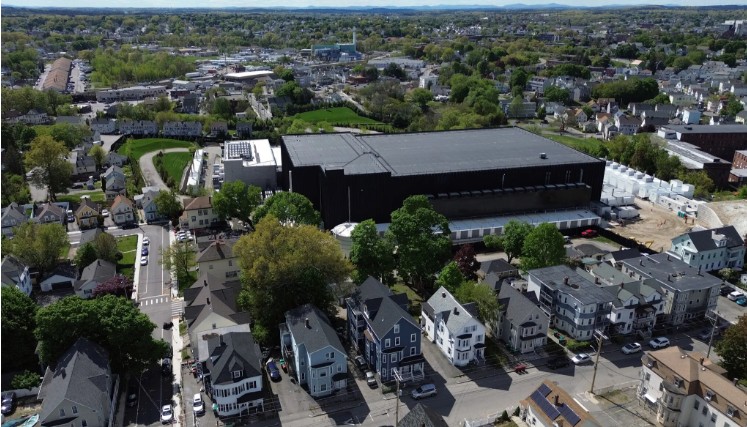
The rapid expansion of artificial intelligence is fueling an unprecedented wave of data center construction across the United States. While these facilities power the digital economy, they are also creating a growing quality-of-life issue for nearby residents: constant industrial noise. What often sounds like distant aircraft, idling truck engines, or a never-ending air-conditioning system can become a relentless presence for communities located near large server farms, tells The New York Times (full article available to subscribers).
Data centers rely on thousands of servers, processors, cooling fans, and backup generators that operate around the clock. As AI workloads demand greater computing power, facilities require even more cooling infrastructure and energy resources. According to a Pew Research Center analysis, the United States has more than 3,000 operational data centers and over 1,500 in development, placing many residential neighborhoods within a few miles of these sites.
The challenge extends beyond ordinary noise. Experts point to low-frequency sound and infrasound, vibrations that may be felt rather than heard. Residents living near some facilities report sleep disruption, headaches, ear pressure, anxiety, and an inability to enjoy their homes. Because traditional noise regulations were designed for sources such as construction activity, traffic, or neighborhood disturbances, they often fail to account for the continuous low-frequency hum generated by modern data centers.
This regulatory gap has prompted legal action. Homeowners in Vineland, New Jersey; Dowagiac, Michigan; and Lowell, Massachusetts have filed lawsuits alleging that data center operations diminish property values and interfere with their quality of life. Operators argue that they comply with existing regulations and contribute to jobs, economic development, and critical digital infrastructure.
The industry is exploring quieter technologies, including liquid cooling systems that can significantly reduce fan noise. However, these solutions are more expensive to deploy. Meanwhile, experts argue that better measurement standards are needed because commonly used noise metrics often overlook low-frequency sounds.
The debate highlights a broader question surrounding AI infrastructure: as society benefits from expanding computing capacity, what responsibilities do data center operators have to ensure they remain good neighbors to the communities that host them?
