

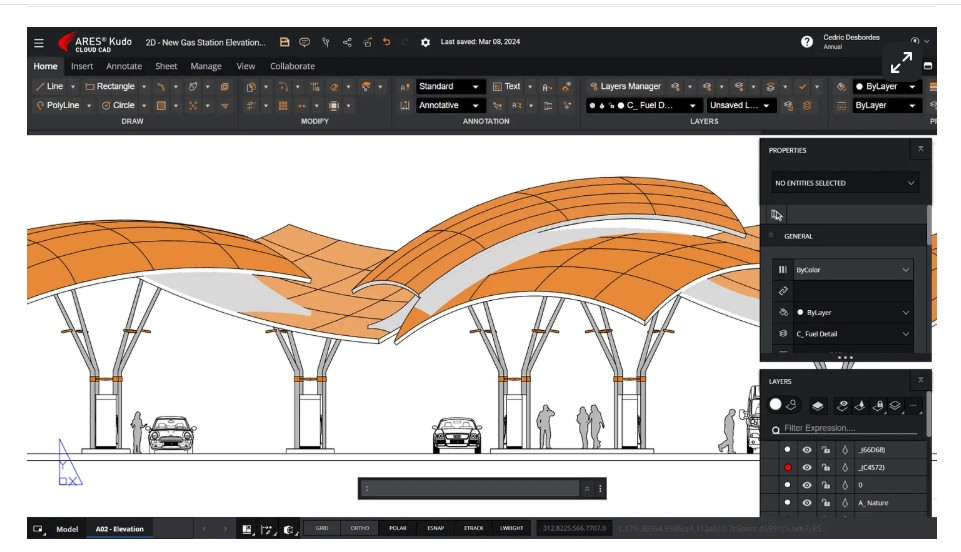
At the recent neXt 2025 event by Graebert, the company’s leadership addressed key questions in a Q&A that revealed their strategic direction for CAD in DWG. They emphasized that the familiar DWG format remains central, but the workflows surrounding it are shifting—toward cloud, mobile, collaboration, and automation, according to the WorldCAD Access blog.
One recurring theme: the “ARES Trinity” concept. Graebert positions its ARES Commander (desktop), ARES Kudo (cloud), and ARES Touch (mobile) as integrated across platforms, allowing users to work on DWG drawings on Windows, macOS, Linux, in a browser, or on a tablet. In the Q&A, the company acknowledged users still anchored in 2D and transitioning from legacy systems, yet seeing demand for 3D, BIM compatibility, and AI-assisted features.
Graebert’s executives confirmed that AI is no longer an optional add-on; it’s baked into future releases. Features such as language-based commands, drawing automation (for example, extracting BIM data into DWG or batch-processing via the cloud) are gaining priority. On licensing and business models, they noted a competitive stance: the cost of their full “Trinity” offering could span many years of their rivals’ pricing, positioning value as a differentiator.
For engineering and CAD managers, the practical takeaway is threefold:
- Evaluate whether your DWG workflows should move toward a unified “desktop + cloud + mobile” model rather than just desktops.
- Ask suppliers about the readiness of AI-assisted drawing tasks and how automation can relieve repetitive workloads.
- Monitor licensing and platform choices: the market is shifting toward subscription, cross-platform, and value-bundle models.
Graebert’s Q&A reveals that CAD in DWG is entering a phase where traditional drawing tools meet cloud-native collaboration, AI-assisted workflows, and flexible licensing. The core format remains, but how professionals engage with it is evolving rapidly.
