

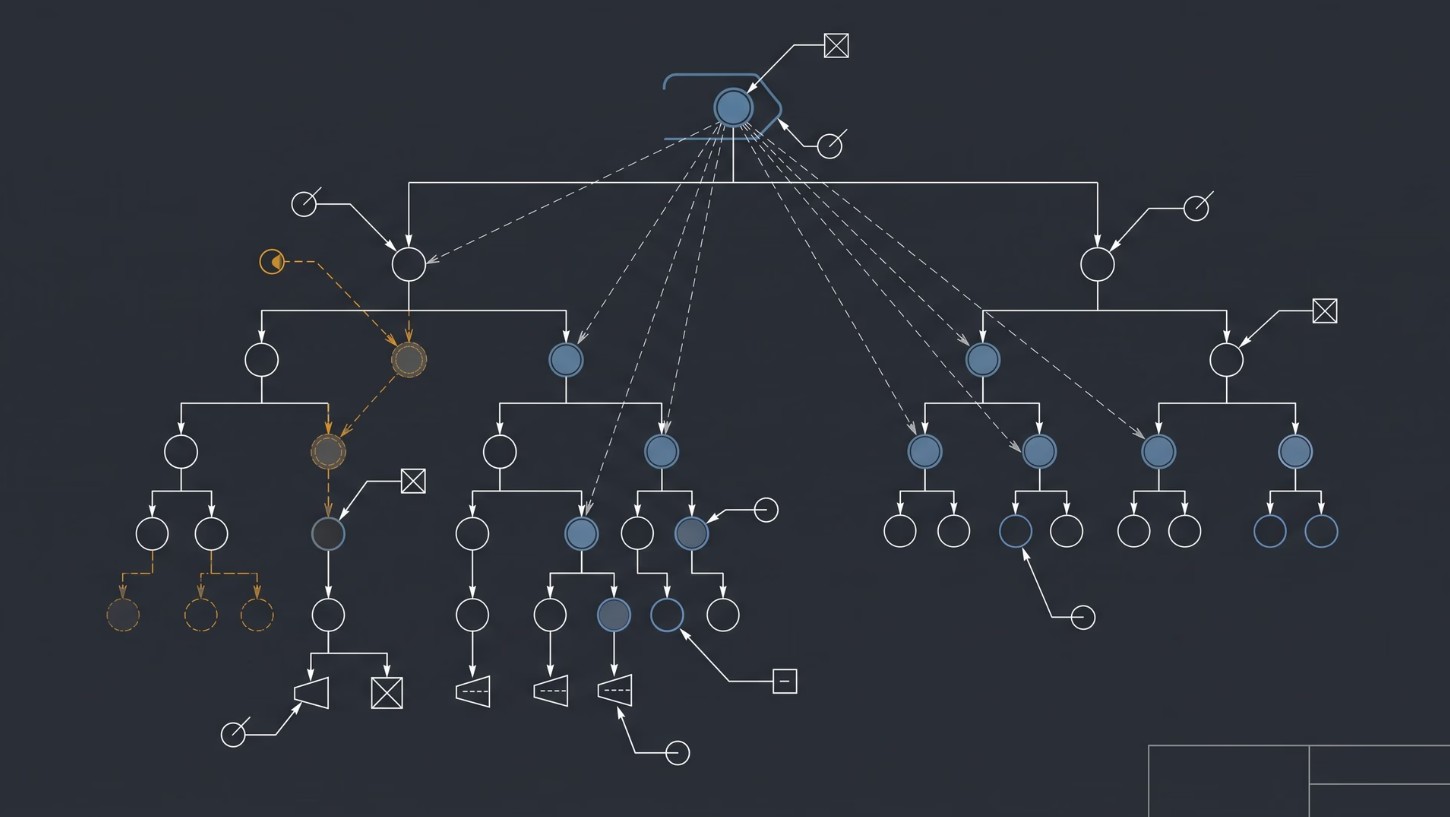
Product lifecycle management, or PLM, software goes far beyond managing CAD files. It creates a connected product record covering bills of materials, engineering changes, supplier information, quality records, compliance data, and lifecycle status from initial design through retirement.
The Leo AI article distinguishes PLM from product data management, or PDM. PDM primarily controls CAD files, revisions, and access. PLM connects engineering information with manufacturing, sourcing, quality, and other functions. For example, it can manage the transition from an engineering bill of materials to a manufacturing bill of materials while routing engineering changes through formal approval processes.
PLM platforms range from enterprise systems such as PTC Windchill, Siemens Teamcenter, and Dassault Systèmes ENOVIA to lighter systems including Arena PLM, Autodesk Fusion Manage, Propel, and Aras Innovator. SAP and Oracle also integrate PLM capabilities with broader enterprise software. The appropriate platform depends on company size, industry, existing CAD and ERP systems, and collaboration requirements.
Cost is more complicated than licensing. According to the article, licenses can range from hundreds to thousands of dollars per user annually. Implementation, legacy-data migration, integration with CAD, ERP, and quality systems, and ongoing administration can equal or exceed software costs, particularly during the first year.
Smaller engineering organizations may not need full PLM. Teams with a single product line, one manufacturing site, and fewer than roughly 20–30 engineers can often manage effectively with disciplined PDM and change-control processes. PLM becomes more valuable as organizations add sites, suppliers, regulatory requirements, and complex cross-functional workflows.
The article also positions AI as an additional layer over existing PLM and PDM systems. Tools such as Leo can help engineers search historical designs, calculations, standards, and decisions without replacing the underlying systems, potentially making accumulated engineering knowledge easier to reuse.
