

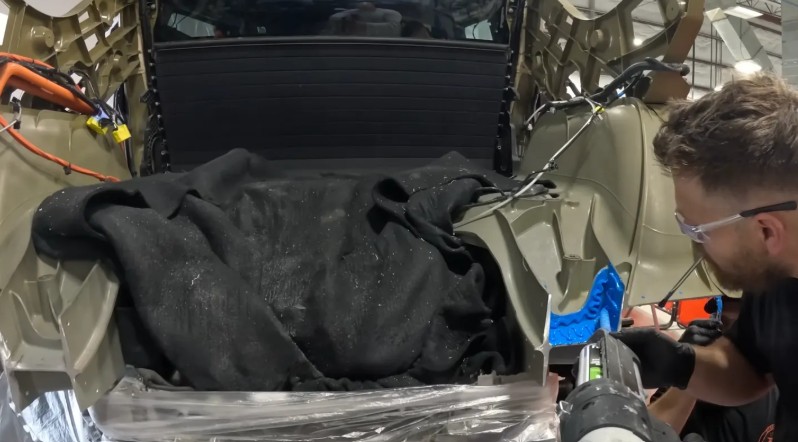
A recurring theme throughout this edition of Hardware FYI is that transformative engineering advances often emerge from unexpected places. The article begins with Tesla’s Cybertruck repair strategy, which challenges concerns that gigacast vehicle structures would be impossible or prohibitively expensive to repair. According to Tesla’s repair procedures, damaged sections of large aluminum castings can be cut away and replaced using bonded and riveted donor pieces. Central to this process are crash-durable adhesives such as Fusor 2098, demonstrating that modern structural adhesives have evolved far beyond traditional notions of glue and now play a critical role in vehicle manufacturing and repair.
The article then revisits the legacy of Google and IEEE’s 2014 Little Box Challenge, which sought dramatic reductions in power inverter size. Although the competition did not produce a single breakthrough technology, it stimulated renewed research in power electronics. Several innovations that emerged from participating teams later found applications in areas such as motor drives, advanced switching topologies, and high-density power conversion. The story illustrates how open-ended engineering challenges can generate valuable technological spillovers even when they fall short of their original goals.
Another section provides a practical explanation of Product Data Management (PDM) and Product Lifecycle Management (PLM). Using the familiar example of managing CAD files in a shared folder, the article explains how PDM governs engineering data, revisions, metadata, and assembly relationships, while PLM extends those controls into manufacturing, quality, supply chain operations, and external partners.
The newsletter also highlights Architecture of Consoles, a detailed archive documenting the hardware design of video game systems. Among the examples discussed is Nintendo’s Virtual Boy, whose unusual stereoscopic display used oscillating mirrors and rows of red LEDs to create a 3D effect.
The edition concludes with a roundup of startup funding activity. Companies securing major investments include Standard Bots for industrial robotics, Podium Automation for electrical control panel manufacturing, Fabri for automated investment casting, NOX METALS for domestic metal production, and Neura Robotics, which raised up to $1.4 billion to accelerate humanoid robot development. Together, these stories underscore the continued importance of manufacturing innovation, materials science, and automation in shaping the future of engineering.
