

Thermoforming is one of the oldest and simplest methods of plastics manufacturing, yet it continues to provide opportunities for entrepreneurs and small manufacturers. A recent Hardware FYI article explores the process through the example of OAM USA, a company that produces plastic slip-on body panel covers for trucks as a lower-cost alternative to traditional rust repair. The story illustrates how relatively simple manufacturing technologies can support viable niche businesses with modest startup costs.
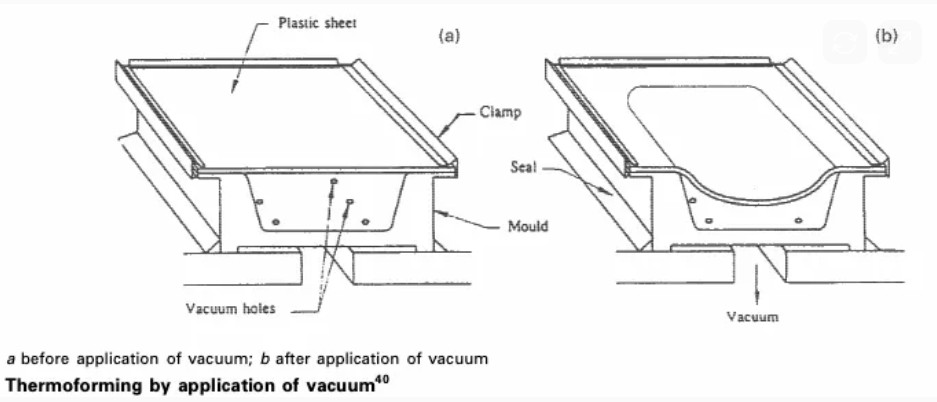
Unlike injection molding, which requires expensive tooling and specialized equipment, thermoforming begins with a flat sheet of thermoplastic. The sheet is heated until it softens, then shaped over a mold using vacuum, pressure, or mechanical assistance before being cooled into its final form. The process is particularly well-suited for large, thin-walled products such as trays, covers, liners, enclosures, and packaging components. Its primary advantage is the lower cost and faster production of molds compared with many other plastics manufacturing methods.
The tradeoff is that thermoforming has limitations. Complex geometries can be difficult to achieve, and maintaining consistent material thickness across a part can be challenging. As a result, the process works best for products that are essentially formed shells rather than highly detailed structural components.
The article highlights OAM USA’s journey from an auto body shop service to a dedicated manufacturing operation. Unable to find a local supplier for its products, the company developed its own production capability, including a homemade thermoforming machine built from basic industrial components. This example reflects a broader pattern in manufacturing, where businesses thrive by serving markets that larger manufacturers ignore. Older vehicles, legacy equipment, and specialized aftermarket products often continue generating demand long after original equipment manufacturers discontinue support.
The broader lesson is that manufacturing innovation does not always require advanced robotics or billion-dollar factories. Sometimes a straightforward production process, combined with a clear understanding of customer needs, can create a sustainable business. Thermoforming remains a valuable example of how simple technology can solve practical problems and support profitable niche manufacturing in an increasingly complex industrial landscape.
