

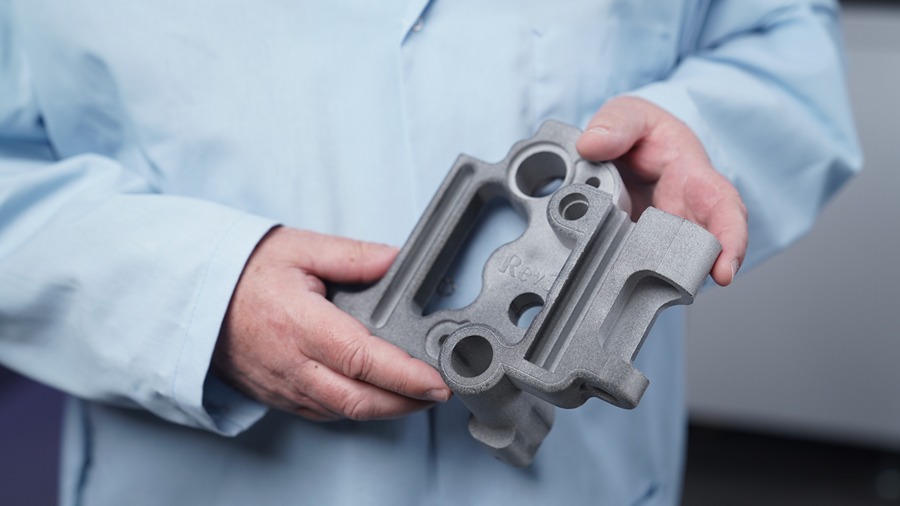
MINNETONKA, MN and REHOVOT, Israel, Aug 12, 2025 – Toyota’s production engineering group is working with Stratasys to expand the use of 3D printing on the factory floor. This approach allows workers to integrate 3D printing technology in producing tools, fixtures, and jigs in-house, moving from design to prototype in one day.
In a partnership spanning over 10 years, Toyota engineers have used Stratasys 3D printers and materials designed for factory conditions. These polymers limit dependence on external suppliers and lengthy production time, enabling engineering teams to adjust manufacturing as needed. Toyota uses the Stratasys F3300, F900, Origin One, F770, Neo800, H350, F370, J850, and Fortus 450mc printers to produce factory tooling, end-use parts, and functional prototypes across its North American facilities.
Toyota is using Stratasys industrial 3D printing technology across its North American operations to create custom tools for the production needs. These tools are designed to improve workflow efficiency and worker safety, while holding up to regular factory use. Much of this work comes from the Toyota Add Lab, an in-house additive manufacturing facility launched in January 2023. The lab’s focus is on research, development, and manufacturing processes by applying additive manufacturing solutions.
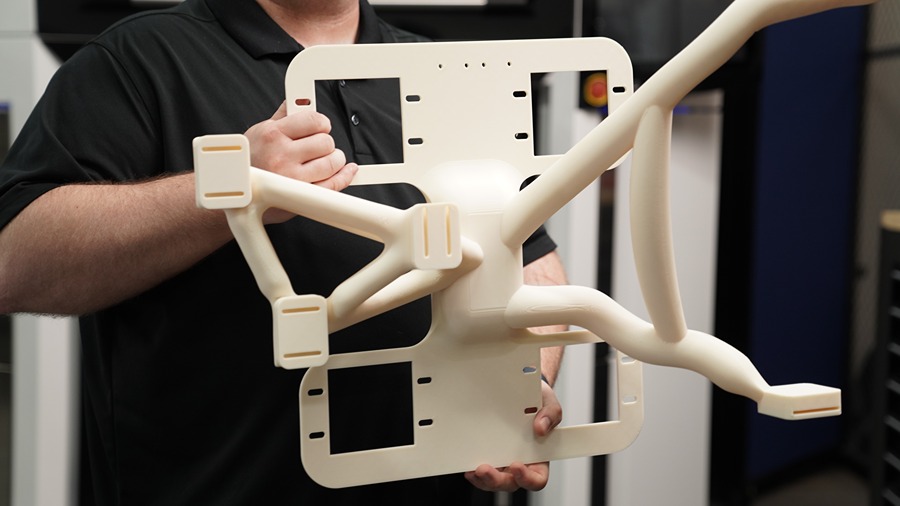
“Sometimes we start with nothing more than a sketch on paper or an idea in our heads,” said Dallas Martin, additive manufacturing engineer at Toyota North America. “We can model it digitally and hold a working part in our hands the very next day. That speed lets us move quickly, implement safer solutions, and continuously iterate to improve our processes.”
“Additive manufacturing has transformed how our teams collaborate and innovate,” said Lisa Bednar, group manager, production engineering at Toyota North America. “Instead of sending an idea out and waiting weeks for a part, we’re building it ourselves, refining it the same day, and getting it into production faster. It’s not just about speed – it’s about giving our people the tools to think differently and act immediately.”
“Toyota is a standout example of how leading manufacturers are leveraging additive manufacturing to deliver meaningful operational impact,” said Rich Garrity, chief industrial business officer at Stratasys. “Their teams are using our technology to move faster, adapt on the fly, and build safer, more efficient production environments. We’re proud to support a partner that’s turning bold ideas into real-world, measurable improvements on the factory floor.”
Source: Stratasys
About Stratasys

Stratasys Ltd., founded in 1989 by S. Scott Crump, develops additive manufacturing and 3D printing solutions using polymer-based materials. The company is headquartered in Eden Prairie, MN, and Rehovot, Israel. Its offerings include 3D printers, consumable materials, and software tools used in aerospace, automotive, healthcare, and consumer goods industries. Stratasys technology supports the production of complex parts made from materials such as ABS, polyphenylsulfone (PPSF), and polycarbonate. As of 2024, the company served approximately 25,000 customers worldwide and employed about 2,000 people across 31 offices.
About Toyota

Toyota Motor Corporation, founded in 1937 and headquartered in Toyota City, Japan, is a multinational automotive manufacturer that designs, builds, and sells passenger cars, commercial vehicles, and luxury models under brands such as Toyota and Lexus. The company also operates in financial services, housing, and marine products. In fiscal year 2025, it reported consolidated net revenue of about $317B.
