

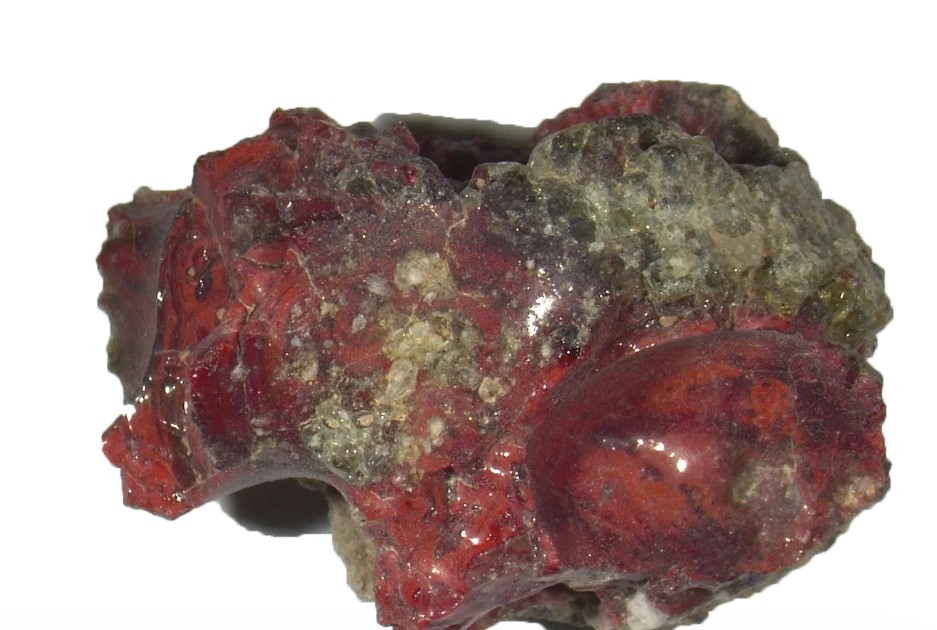
An article in Wired.com (full article available to subscribers) explores the discovery of an unusual material formed during the Trinity nuclear test in 1945, the first detonation of an atomic bomb. Researchers studying radioactive debris from the explosion identified a rare quasicrystal embedded within trinitite, the green glassy substance created when the bomb’s immense heat fused desert sand, copper wiring, steel structures, and asphalt into a new mineral-like material.
The Trinity test, conducted in New Mexico as part of the Manhattan Project, generated temperatures hotter than the surface of the sun and pressures intense enough to fundamentally rearrange matter. Under those conditions, atoms formed structures that do not follow the repeating patterns typical of conventional crystals. The newly identified quasicrystal contains silicon, copper, calcium, and iron arranged in a highly ordered but nonrepeating atomic structure, something rarely found in nature.
Scientists believe the discovery offers more than historical curiosity. Because quasicrystals can preserve evidence of the extreme environments that created them, they may serve as durable forensic records of nuclear explosions. Researchers suggest similar materials could help investigators analyze illicit nuclear tests or understand the physical processes involved in high-energy detonations.
The article explains that quasicrystals were once considered scientifically impossible until their discovery in the 1980s challenged traditional crystallography. Since then, naturally occurring examples have remained exceptionally rare, often associated with meteorite impacts or similarly violent events. The Trinity quasicrystal represents the oldest known anthropogenic quasicrystal created by humans.
Beyond its scientific implications, the discovery also reconnects modern materials science with one of history’s most consequential technological moments. The Trinity explosion did not simply demonstrate the destructive power of nuclear weapons; it briefly generated physical conditions so extreme that entirely new forms of matter emerged from the blast.
The finding highlights the unexpected scientific legacy of the atomic age, where even decades-old nuclear debris continues to reveal new insights into physics, geology, and the behavior of materials under extraordinary conditions.
