

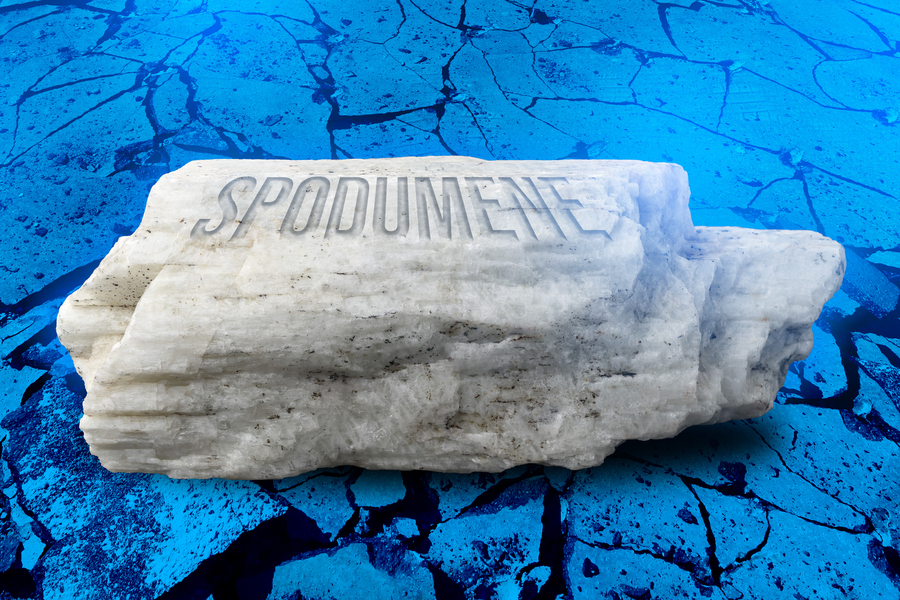
Researchers at Massachusetts Institute of Technology have developed a new method for extracting lithium from spodumene, the world’s most common lithium-bearing mineral, using a low-temperature process that could significantly reduce the cost and environmental impact of lithium refining. The work addresses a major challenge in global battery supply chains: transforming hard-rock lithium deposits into battery-grade materials without relying on energy-intensive processing.
Today, most hard-rock lithium extraction requires heating spodumene to temperatures above 1,000°C before chemically leaching lithium from the rock. The process consumes large amounts of energy, generates waste, and contributes to the concentration of lithium refining capacity in China. According to the MIT team, these factors have made hard-rock extraction substantially more expensive than lithium production from brines.
The new process eliminates the high-temperature roasting step. Instead, researchers use a liquid reagent to dissolve spodumene and separate it into commercially useful products. The technique produces battery-grade lithium salts while also recovering alumina suitable for smelting and silica that can be used in cement production. Rather than treating the remaining material as waste, the process converts much of the rock into valuable outputs.
A key feature of the method is its closed-loop design. The solvent and reagent can be recovered and reused, allowing waste generation to approach zero. Researchers estimate that the process could reduce refining costs by roughly half compared with conventional hard-rock extraction, potentially making it competitive with lithium production from brine resources.
The study was published in Science and involved researchers including Camden Hunt, Benjamin Mowbray, and Yet-Ming Chiang. The team has already begun commercializing the technology through an MIT spinout called Rock Zero.
The researchers believe the approach could help unlock lithium resources in countries such as the United States and Australia, where hard-rock deposits are abundant. By lowering costs, reducing waste, and recovering multiple useful materials from a single mineral source, the process offers a potential pathway toward more localized and sustainable lithium production.
