

A research team at Rice University has developed a groundbreaking transfer-free method to fabricate ultrathin semiconductors—specifically two-dimensional (2D) materials—directly on existing electronic components. This marks a significant leap in the integration of advanced semiconductors into functional devices, tells Tech Xplore.
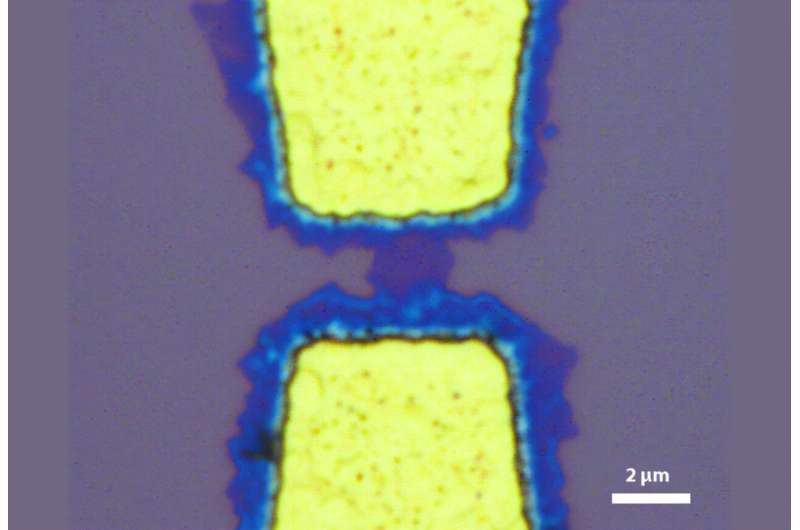
Traditionally, manufacturing devices with 2D semiconductors, such as tungsten diselenide (WSe₂), involves the delicate process of transferring fragile films from one surface to another. This step is prone to damage and error, hindering efficient device production. The new approach eliminates this vulnerable stage by using chemical vapor deposition (CVD) to grow the ultrathin semiconductor directly onto patterned gold electrodes, enabling seamless and robust integration.
The researchers successfully demonstrated this technique by fabricating a functional proof-of-concept transistor. This showcases the potential of their method to streamline and strengthen the assembly of next-generation electronics, including applications in neuromorphic computing—systems designed to mimic neural structures—and other technologies that demand ultrathin, high-speed semiconductors.
Ultrathin semiconductors, such as transition metal dichalcogenide (TMD) monolayers like MoS₂ or WSe₂, are only a few atoms thick and exhibit unique properties: direct band gaps for optoelectronics, high electron mobility, sensitivity to strain, and promise for flexible or valleytronic devices. Growing these materials directly onto electronics could reduce production complexity, improve reliability, and lower costs by avoiding mechanical transfer steps.
In summary, the Rice University team’s transfer-free CVD growth of ultrathin semiconductors on patterned electronics presents a robust manufacturing advancement. It enhances integration for next-generation electronics, neuromorphic devices, and other areas that benefit from atomically thin, high-speed semiconductor layers—all while eliminating a historically fragile and limiting production step.
