

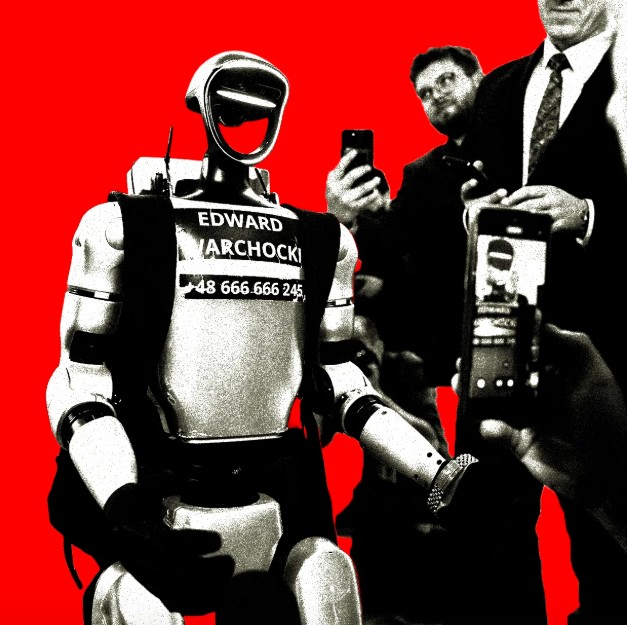
China’s Unitree G1 humanoid robot is becoming an unlikely social media celebrity. From dancing at sporting events to interacting with pedestrians, the four-foot-tall robot is demonstrating that humanoids can already attract crowds, even if their ability to perform useful autonomous work remains limited, tells Wired.com (full article available to subscribers).
One example is Edward Warchocki, a Unitree G1 operated by Polish entrepreneurs Bartosz Idzik and Radosław Grzelaczyk. After Idzik connected the robot to a large language model, Edward could hold live conversations in Polish. Its public appearances, including a visit to the Polish parliament and a viral encounter with wild boars, helped it accumulate more than 1 million followers and 4 billion social media views.
Similar G1 robots have appeared worldwide as Rizzbot, Bart Robot, and Brickell Clanker. Their popularity reflects Unitree’s unusual position in the humanoid robotics industry. While many competitors continue testing prototypes, Unitree is already selling robots commercially. The company shipped 5,511 humanoids in 2025 at an average price below $25,000, with international markets accounting for 43% of sales. It also became profitable that year.
In the United States, the basic G1 starts at $13,500 before tariffs, shipping, and taxes. More capable versions cost considerably more. Miami-based entrepreneur Jake Cooperstein purchased a customizable version for $66,000 and turned it into Brickell Clanker, which earns money through appearances at parties, nightclubs, and corporate events.
Yet these robots are far from fully autonomous. Operators typically control their movements remotely because unexpected behavior could create safety risks. Programming new physical actions also requires technical expertise.
The G1 therefore highlights an important gap in humanoid robotics. Unitree has made robots affordable and entertaining enough to reach real customers, but transforming them from social media performers into reliable workers remains the harder engineering challenge.
