

The University of Wisconsin-Madison is establishing a national research hub aimed at accelerating the discovery and development of materials capable of surviving extreme conditions. Backed by nearly $25 million from the U.S. National Science Foundation, the NSF Materials AI and Transformation through Research Infrastructure for eXtreme environments Materials Innovation Platform, or NSF MATRIX-MIP, will combine advanced materials research with artificial intelligence and automation.
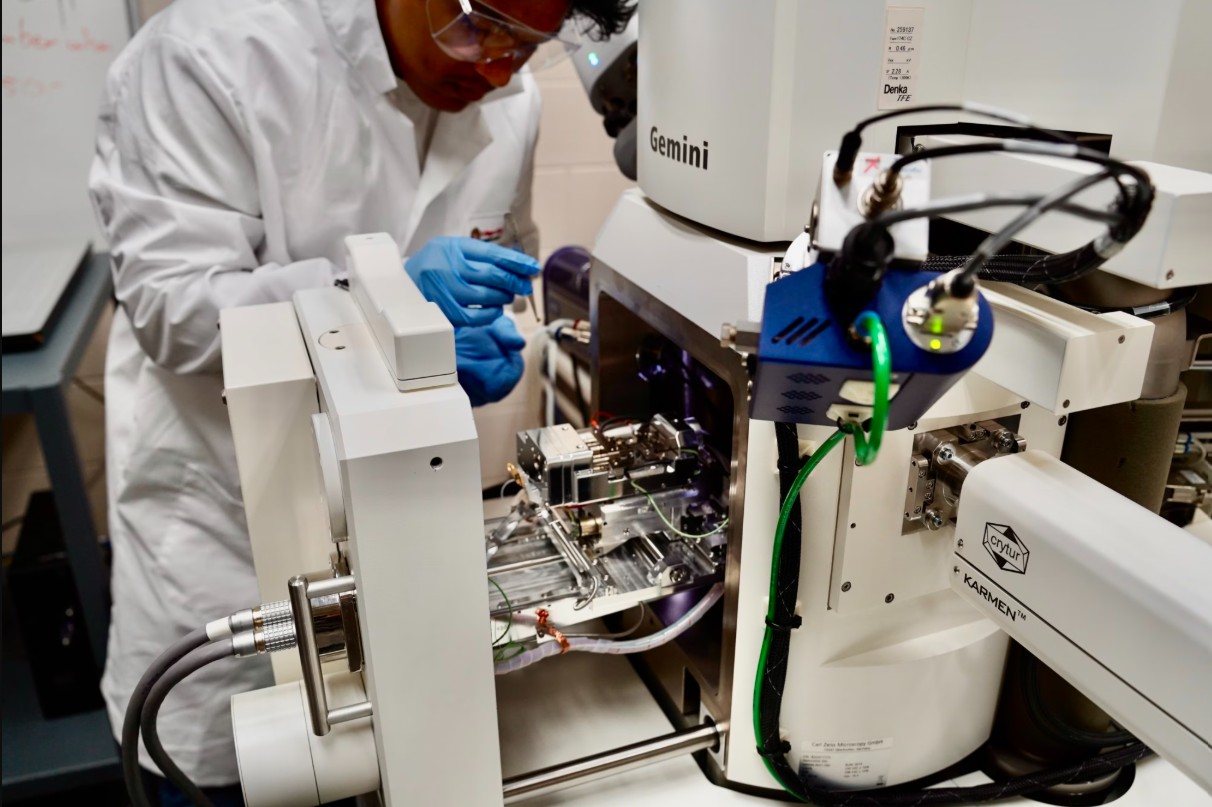
A major component will be the new Hard Materials Lab at UW-Madison’s College of Engineering. The facility will give researchers from academia, government, and industry open access to materials synthesis, manufacturing, characterization, testing, modeling, and AI within a single research platform. Bringing these capabilities together could shorten the time required to identify, produce, and evaluate promising materials.
The research targets applications where conventional materials face combinations of intense heat, radiation, corrosion, and mechanical stress. These include fusion energy systems, aerospace technologies, advanced manufacturing, transportation, and national security. Researchers will investigate complex materials engineered at multiple scales, ranging from compositionally complex ceramics and metals at the atomic level to composites and additively manufactured hierarchical structures.
AI-powered data analysis, automation, and advanced characterization will play important roles in accelerating experiments and evaluating results. The center will also develop new instruments and research workflows that can be shared with the wider materials science community.
Led by materials science and engineering professor Izabela Szlufarska, NSF MATRIX-MIP will become part of the Wisconsin Centers for Nanoscale Technology. This connection gives the initiative access to an established research community, instrumentation, and technical expertise. The project also involves researchers across multiple UW-Madison engineering disciplines, along with CompuTherm, the University of Chicago, and Argonne National Laboratory.
The facility is expected to welcome its first users in early 2028 and become fully operational by 2030. Its broader goal is to make sophisticated materials research infrastructure more widely available while speeding the transition from scientific discoveries to practical technologies.
