

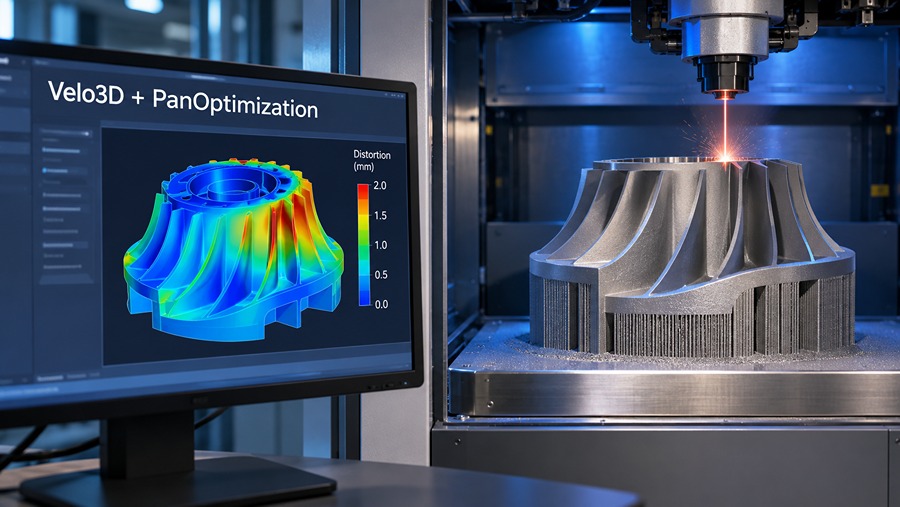
FREMONT, CA, Nov 24, 2026 – Velo3D has reported results from integrating PanOptimization‘s PanX simulation technology with its calibration and manufacturing processes. In a copper-nickel customer program, 11 of 12 builds were completed on the first attempt. Velo3D also reported that the integration reduced engineering time for simulation and distortion pre-compensation from 4 to 40 hours per build to less than one hour.
The copper-nickel program used Velo3D’s Sapphire XC platform. The engineering team simulated the builds, representing 33 customer geometries and 1,756 print hours. The remaining build experienced a support structure failure and was completed on its second attempt following adjustments informed by the initial results.
“I have been in AM for 15 years. When I started out ‘first-time right’ was really just a marketing buzz phrase. To see that it is now actually achievable through use of simulation is very satisfying. It is fun watching what a capable and forward-thinking organization like Velo can achieve with a powerful tool like PanX,” said Erik Denlinger, co-founder and chief engineer at PanOptimization.
“Customers need more than the ability to print a complex part. They need a manufacturing process they can plan around,” said Arun Jeldi, chief executive officer of Velo3D. “By combining simulation with our calibration methods and production expertise, we’re improving our ability to identify potential issues before a build begins. These results demonstrate meaningful progress toward more predictable and efficient production of complex metal components.”
Simulation Integration and Process Calibration
Velo3D integrated PanX into its existing print preparation workflow, allowing CAD geometry, support structures and process definitions to carry through without manual rebuilding.
Velo3D also used production data and in-situ thermal measurements to refine simulation inputs, including powder conductivity, process efficiency and thermal boundary conditions. These adjustments improved agreement between simulated and measured manufacturing behavior.
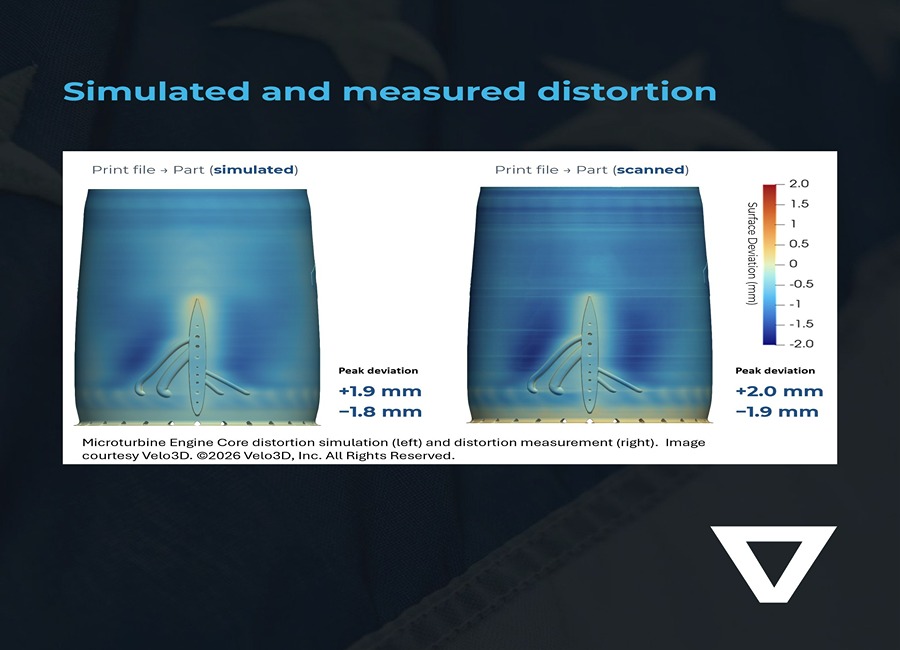
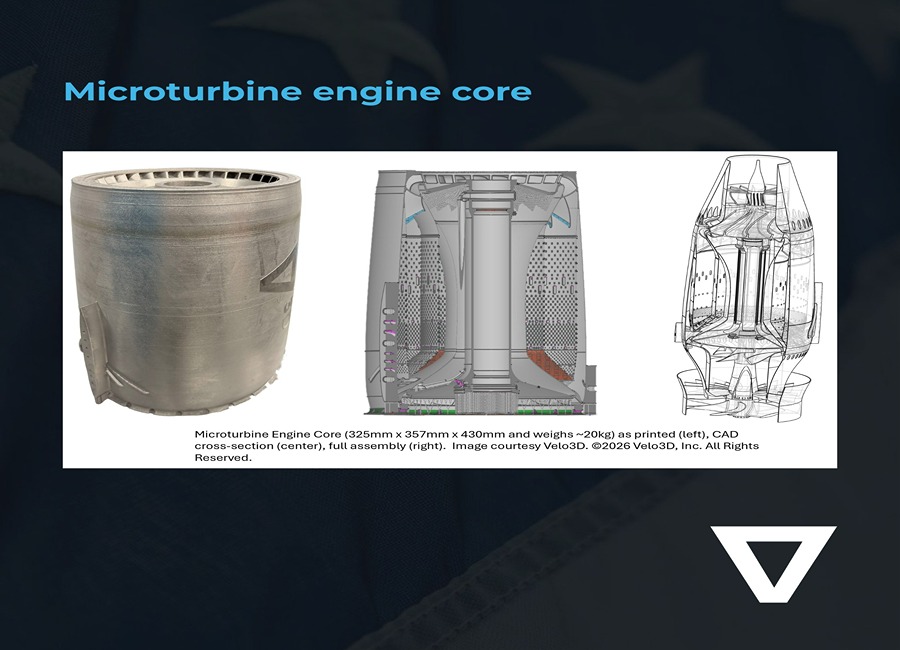
In a separate demonstration, Velo3D evaluated a microturbine engine core measuring approx. 13 by 14 by 17 inches. PanX simulations performed without calibration or trial prints followed measured distortion trends and predicted peak distortion within approx. 0.005 inches (125 microns).
After one round of simulation-based compensation, peak dimensional deviation decreased from +2.0/−1.9 mm to +0.7/−0.6 mm, representing a 65% reduction. The resulting component met its specified dimensional tolerances.
Source: Velo3D
About Velo3D

Velo3D is a U.S. metal additive manufacturing company founded in 2014 and based in Fremont, California. The company develops laser powder bed fusion 3D printers, print preparation software and quality assurance systems for metal part production. Its products include Sapphire printers, Flow print preparation software and the Assure quality control system. Velo3D also provides engineering support, training, maintenance and application services. The company serves aerospace, defense, aviation, energy, semiconductor and industrial manufacturing customers. Its systems produce metal parts for propulsion, energy, transportation and industrial applications. Velo3D designs and builds its laser powder bed fusion systems in the United States. The company reports more than 1,000 customers worldwide.
About PanOptimization

PanOptimization is an engineering software company headquartered in State College, PA. Founded by Pan Michaleris, it develops simulation software for metal additive manufacturing and welding processes. Its PanX software models manufacturing conditions and predicts potential production problems, including material distortion and cracking. The software supports laser powder bed fusion and directed energy deposition processes. Engineers use PanX to evaluate component designs, analyze temperature changes and adjust manufacturing parameters before production. PanOptimization provides its software through annual subscriptions for installation on customers’ computers. Its customers include manufacturers, equipment suppliers, engineering firms, universities and research institutions. The company serves aerospace, defense, automotive, energy, biomedical and industrial manufacturing sectors. It also works with international distributors, technology partners and equipment manufacturers.
