

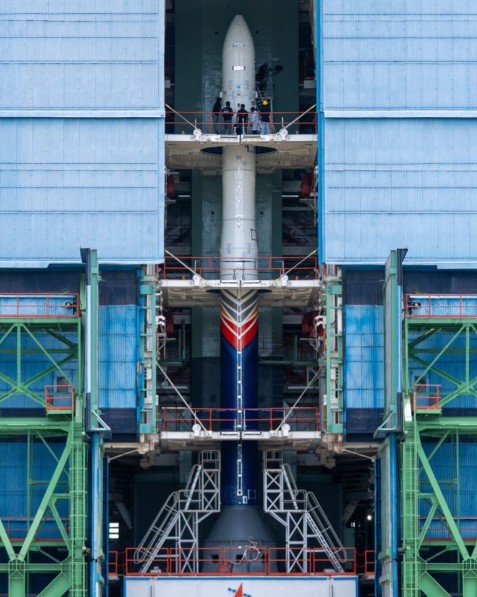
Skyroot Aerospace has marked a major milestone for India’s private space sector and additive manufacturing after its Vikram-1 rocket reached orbit using 3D-printed propulsion technology. The July 18 mission made Skyroot the first private Indian company to reach orbit, according to this article on the 3D Printing Industry blog.
Vikram-1 launched from ISRO’s Satish Dhawan Space Center in Sriharikota and reached a 450-kilometer low Earth orbit in 16 minutes. The Aagman mission deployed six payloads. Its fourth-stage Orbital Adjustment Module used restartable Raman-1 liquid-propellant engines, which Skyroot describes as India’s first fully 3D-printed orbital engine. The restart capability enabled precise deployment of payloads into separate orbits.
Additive manufacturing is central to Skyroot’s strategy. Producing Raman-1 engines through 3D printing reduces manufacturing time from months to days compared with conventional casting and machining. Combined with carbon-composite airframes and modular avionics, faster engine production could help Skyroot manufacture one complete rocket per month at its Hyderabad facility.
Vikram-1 can carry up to 350 kilograms to low Earth orbit or 260 kilograms to Sun-synchronous orbit. It supports dedicated and rideshare missions with customized orbital deployment. Skyroot plans another Vikram-1 test flight before beginning commercial launches next year. Vikram-II, scheduled to follow in 2027, will use an advanced cryogenic engine and increase capacity to 900 kilograms for low Earth orbit.
Skyroot’s approach reflects a wider shift toward additive manufacturing in rocket propulsion. Rocket Lab already uses extensively 3D-printed Rutherford engines, while Indian competitor AgniKul has developed the single-piece, 3D-printed Agnilet engine.
For small-satellite launch providers, 3D printing offers more than manufacturing flexibility. Faster production, fewer conventional supply-chain dependencies, and quicker design iteration could shorten launch cycles and reduce costs. Vikram-1’s orbital success demonstrates that additive manufacturing is becoming an important production technology for commercial spaceflight.
