

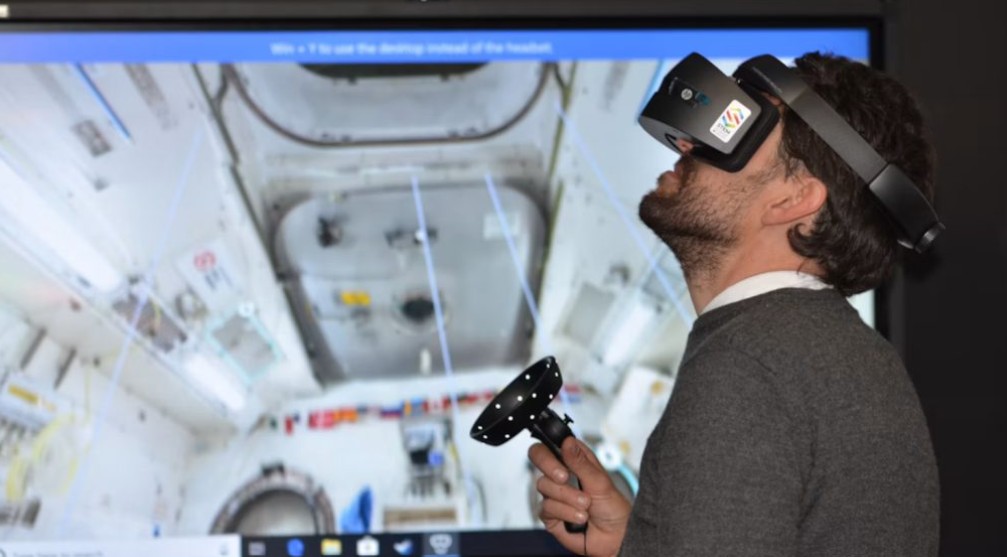
The virtual reality headset market is undergoing a significant transition as the initial surge in consumer adoption gives way to a more measured phase of growth. The Develop3D article examines whether the industry’s early boom has ended and concludes that, while consumer sales have slowed, virtual and mixed reality technologies continue to evolve through enterprise adoption, improved hardware, and emerging professional use cases. Rather than signaling the end of immersive computing, the market is becoming more focused and application-driven.
Recent market data show that global headset shipments have declined following years of rapid expansion. Economic pressures, high device prices, limited consumer content, and slower replacement cycles have contributed to weaker demand. Even high-profile product launches have yet to trigger widespread consumer upgrades, suggesting that the industry has moved beyond its early growth phase. Manufacturers are responding by refining product strategies rather than pursuing volume alone.
At the same time, enterprise adoption continues to gain momentum. Companies in engineering, manufacturing, architecture, healthcare, and product design increasingly use immersive technologies for design reviews, digital prototyping, simulation, training, and remote collaboration. These professional applications deliver measurable productivity benefits, making businesses more willing than consumers to invest in advanced headsets and supporting software platforms. The article argues that this enterprise demand is becoming a key driver of industry growth.
Hardware development also continues despite slower sales. Manufacturers are improving display quality, optics, ergonomics, hand tracking, passthrough video, and spatial computing capabilities while reducing device size and weight. Advances in processors and AI are enabling more capable standalone systems that no longer depend heavily on external computers. These improvements are expected to broaden professional use cases and make future devices more practical for extended use.
The article concludes that the VR industry is moving from a consumer-focused expansion to a more sustainable market built around practical value. Success will increasingly depend on solving real engineering and business challenges rather than pursuing consumer novelty. As immersive technologies mature, enterprise workflows, industrial visualization, and spatial computing are likely to define the next stage of virtual reality’s evolution.
