

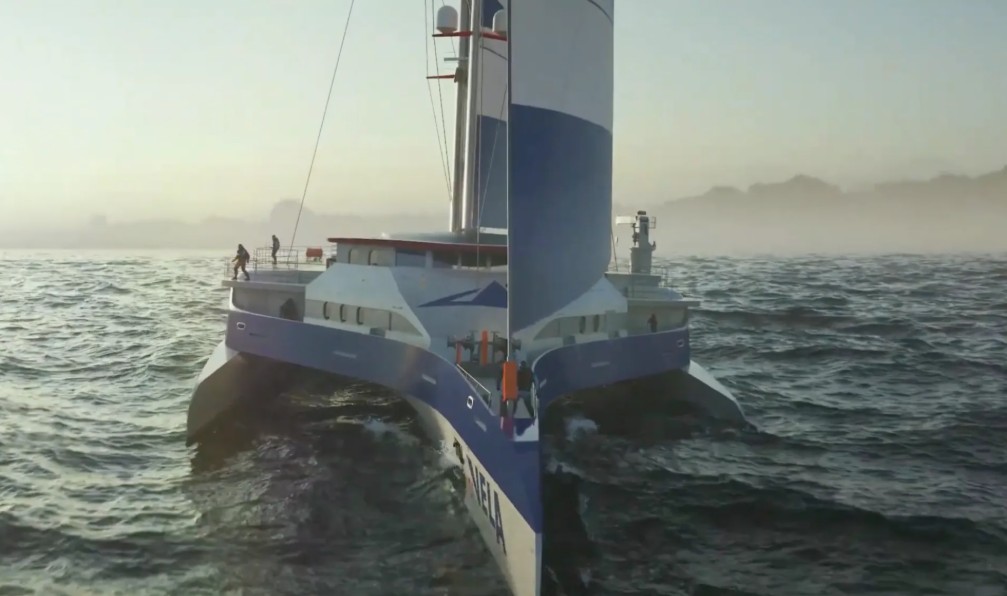
International shipping is embracing one of the oldest forms of transportation in a modern effort to reduce carbon emissions. Beginning in 2027, DHL will transport selected goods from Europe to the United States aboard a wind-powered cargo vessel developed by French startup VELA. While powered primarily by sails, the vessel incorporates advanced engineering that sets it apart from traditional sailing ships, tells Popular Science.
The 220-foot trimaran is built from lightweight aluminum and carbon fiber, materials commonly used in high-performance racing yachts. Its three hulls provide greater stability during long ocean crossings while supporting an expansive sail area of 6,705 square feet. The carbon fiber mast and high-performance sails enable the vessel to cruise at approximately 14 knots, or 16 miles per hour. A small auxiliary engine is used only for maneuvering in ports, while onboard solar panels generate electricity for the crew and power climate-controlled storage for sensitive cargo such as pharmaceuticals.
Unlike conventional container ships that follow fixed routes, VELA’s vessel relies on prevailing winds and may take up to 15 days to cross the Atlantic, compared with about nine days for standard cargo ships. Because of its slower speed and lower cargo capacity of 415 metric tons, the service is aimed at transporting premium products including wine, cosmetics, pharmaceuticals, and other high-value goods that are less time sensitive.
The project supports DHL’s broader sustainability strategy as the company works toward achieving net zero emissions by 2050. International shipping currently produces about 3% of global carbon dioxide emissions, largely because it depends on heavy fuel oil. VELA estimates its wind-powered vessel can reduce emissions by 99% compared with air freight and by 90% compared with conventional container ships.
The trimaran also offers operational advantages beyond emissions reduction. Its smaller size allows it to access ports that are unavailable to large cargo ships, helping avoid congestion and speed cargo handling. Wind propulsion also reduces underwater noise that can disturb marine wildlife, while the aluminum hull is more recyclable at the end of the vessel’s service life.
Rather than replacing conventional freight, DHL sees wind-powered cargo ships as a specialized logistics option that combines centuries-old sailing principles with modern engineering to create a cleaner and more flexible future for maritime transport.
