

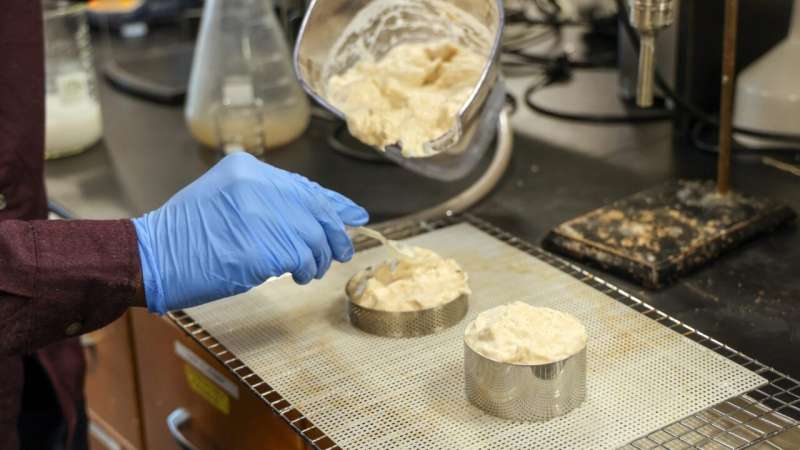
A University of Maine student has developed an environmentally friendly wood-based foam that could replace the petroleum-derived plastic insulation commonly used in beverage coolers. The innovation addresses two long-standing concerns: the environmental impact of plastic foam production and the health risks associated with certain conventional insulation materials. By using wood waste as the primary raw material, the project also creates a productive use for a byproduct that is often discarded or underutilized, tells Tech Xplore.
The foam is produced from cellulose fibers extracted from wood residues. These fibers are processed into a lightweight material that provides strong thermal insulation while remaining biodegradable and free from the hazardous chemicals found in many traditional foams. Unlike petroleum-based alternatives that can persist in landfills for decades, the wood-based material is designed to reduce waste throughout its life cycle.
The research demonstrates that sustainable materials can achieve insulation performance suitable for consumer products without sacrificing safety. Beverage coolers require insulation that keeps contents cold while remaining durable and lightweight, making them an ideal application for testing the new foam. The student focused on creating a material that not only performs well but also minimizes environmental and human health impacts.
Beyond beverage coolers, the technology has the potential to be adapted for other packaging and insulation products that currently rely on expanded plastic foams. If commercialized, it could reduce dependence on fossil fuel-based materials while supporting the use of renewable forest resources and manufacturing byproducts.
The project also highlights the growing role of student-led research in advancing sustainable materials science. By combining renewable resources with practical engineering, the work offers a promising example of how innovative design can replace conventional plastics with safer, more environmentally responsible alternatives.
