

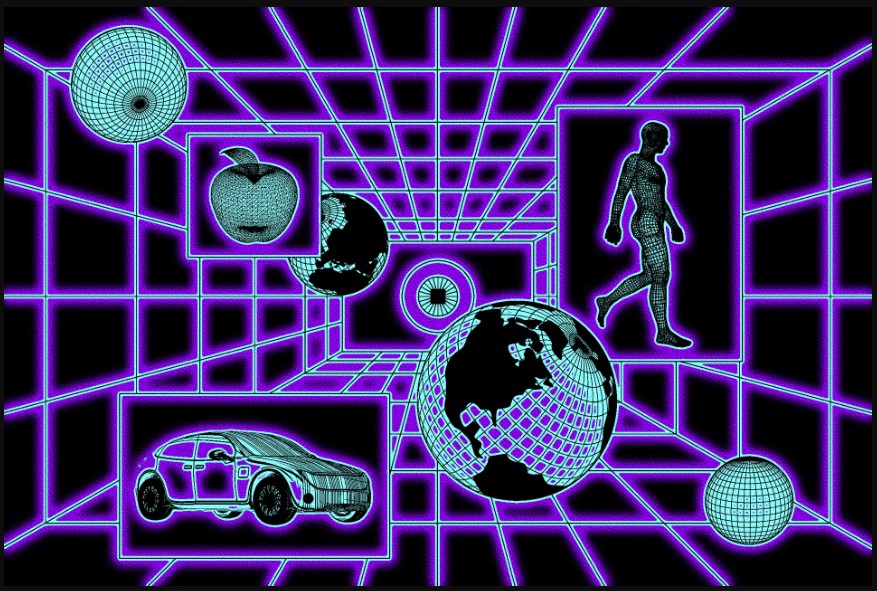
Artificial intelligence is moving beyond text-based interactions toward understanding and simulating the physical world. World models, an emerging category of AI technology, create realistic three-dimensional environments that allow machines to predict movement, understand physical relationships, and practice tasks before operating in real-world conditions, tells Wired.com (full article available to subscribers).
Unlike large language models, which predict sequences of words, world models use visual information to anticipate changes in their surroundings. These systems incorporate physics, cause and effect, and interactions between objects, people, and environments, making them valuable for robotics and autonomous transportation.
Niantic Spatial, which emerged from the company behind Pokémon Go, is developing world models using extensive geospatial data collected through augmented reality applications. Its technology could enable robots to train within digital replicas of actual environments, potentially completing millions of simulated exercises without physical movement.
Autonomous vehicle developer Wayve is applying similar technology to driving. Using dashcam footage, its generative world models recreate hazardous road conditions and unpredictable traffic situations that would be difficult or dangerous to reproduce during physical testing. This approach helps autonomous systems improve their responses to unfamiliar scenarios.
World models also have applications in video game development, where realistic physics and interactive environments are essential. Companies including Tencent and Google are investing in the technology, while researchers such as Yann LeCun and Fei-Fei Li have attracted substantial attention to the field.
Developing these systems requires enormous quantities of visual training data. Companies increasingly employ individuals to record everyday activities, including household chores, providing examples of human movement and object manipulation.
As world models advance, they could become fundamental to domestic robotics, autonomous transportation, and interactive digital environments. Their broader significance lies in enabling AI systems to understand physical consequences rather than simply recognize patterns, bringing machines closer to operating independently in complex environments.
