

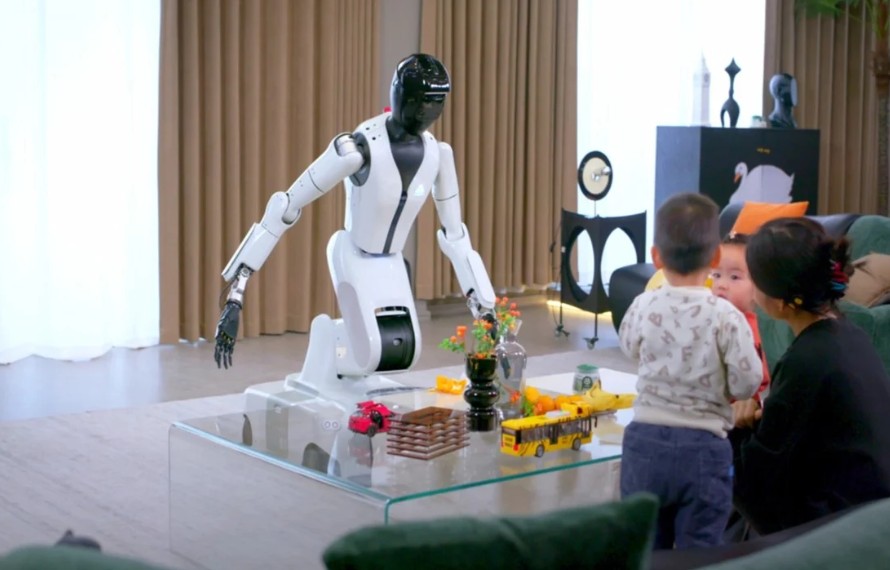
Artificial intelligence is entering a new phase with the emergence of world models, systems designed to understand and simulate how environments change over time. Unlike large language models that predict the next word in a sentence, world models learn the relationships between objects, actions, and physical laws. Their goal is to anticipate what will happen next in both real and virtual environments, making AI better equipped for decision-making, planning, and interaction with the physical world. As researchers explore this technology, China has become one of the most active centers for its development, with companies pursuing different approaches to defining and building world models, tells South China Morning Post.
The technology is attracting growing attention because it extends AI beyond generating text, images, and videos. World models enable machines to create internal simulations of their surroundings, allowing them to test possible actions before carrying them out. This capability is particularly valuable for robotics, autonomous vehicles, industrial automation, and virtual environments, where understanding cause and effect is essential. Instead of reacting to instructions, AI systems can begin to reason about the consequences of their decisions.
Chinese companies are exploring several strategies. Some focus on embodied intelligence for robots, while others are developing virtual worlds that can support gaming, digital twins, or training environments. Despite the excitement, there is still no industry agreement on what constitutes a complete world model. Researchers differ on whether these systems should primarily predict future events, simulate physics, or generate interactive environments that humans and machines can navigate together.
Building effective world models presents significant technical challenges. The systems require vast amounts of multimodal data, including video, sensor readings, motion information, and spatial observations. They must also maintain long-term consistency while accurately representing complex physical interactions. Solving these problems demands advances in computing power, data collection, and machine learning architectures.
Although the field remains in its early stages, world models are widely viewed as a key step toward more capable AI. By combining perception, prediction, and reasoning, they could enable machines to operate more naturally in dynamic environments. As investment and research accelerate, these systems may become the foundation for the next generation of intelligent robots, immersive virtual spaces, and AI applications that interact with the real world rather than simply describing it.
