

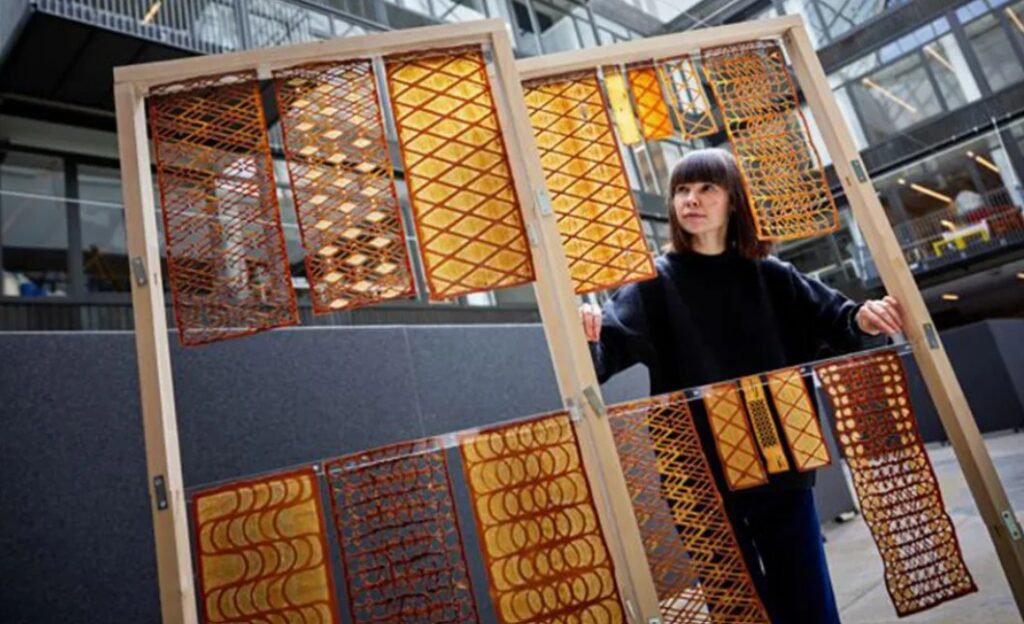
Researchers at Chalmers University of Technology have developed a 3D-printable biomaterial made primarily from baker’s yeast, offering a sustainable alternative to conventional interior design products such as wallpaper, drapes, room dividers, and decorative panels. The work demonstrates how renewable biological materials can be transformed into customizable architectural elements through additive manufacturing, tells Live Science.
The material is created from deactivated baker’s yeast combined with cellulose fibers, alginate, glycerol, and water. These ingredients form a printable paste that can be shaped using a pressure-based 3D-printing process at room temperature. Unlike many industrial manufacturing methods that require high temperatures and energy-intensive processing, this approach reduces energy consumption while minimizing material waste.
A key feature of the material is its versatility. By adjusting the composition of the paste and modifying printing patterns, researchers can control properties such as texture, color, density, porosity, and light transmission. This allows designers to create products with different visual and functional characteristics without relying on synthetic materials derived from fossil fuels.
The research team produced a range of prototype objects, including lattice structures and decorative elements that demonstrate the material’s potential for use in interior spaces. The project highlights the growing interest in bio-based materials that can support a more circular approach to manufacturing and design. Because the material is derived largely from renewable resources, it aligns with broader efforts to reduce the environmental impact of the built environment.
According to the researchers, the work is still at an early stage, and additional development will be needed before the material reaches commercial applications. Future studies will focus on improving durability, scalability, and performance for real-world use.
The project illustrates how advances in biomaterials and additive manufacturing can converge to create sustainable alternatives to traditional interior products. By replacing petroleum-based materials with renewable, printable biomaterials, the technology could contribute to more environmentally responsible design and construction practices in the future.
