

Researchers at National Taiwan University have developed a single-layer metallic glass film capable of precisely controlling infrared emissivity. This breakthrough could improve thermal camouflage systems and advanced thermal management technologies. The study introduces a zigzag-shaped microstructure fabricated using a glancing-angle deposition technique, creating a material that can finely regulate the amount of infrared radiation it emits, tells Tech Xplore.
Controlling thermal emissivity is essential in applications ranging from energy conservation and heat dissipation to infrared stealth technologies. Conventional materials typically possess fixed emissivity values, limiting their ability to adapt to changing environments. The research team addressed this challenge by combining the inherent infrared absorption characteristics of metallic glass with a carefully engineered zigzag architecture. This structure produces strong optical anisotropy, meaning the material’s infrared behavior changes depending on its orientation.
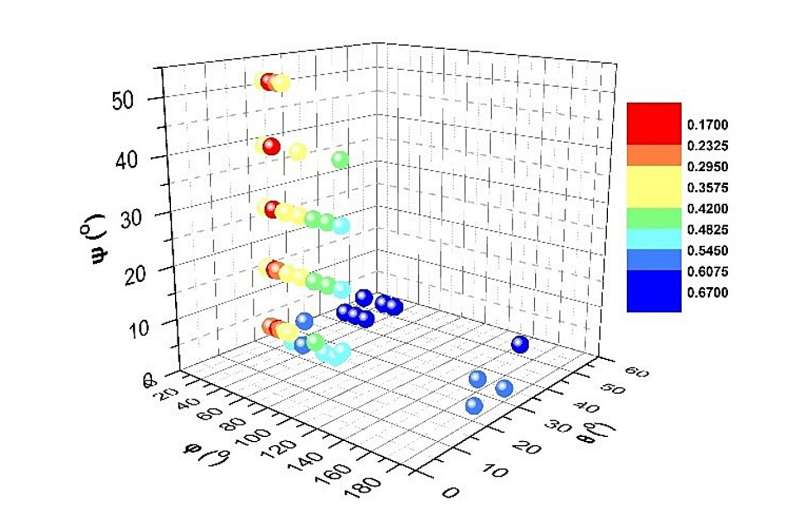
The resulting film demonstrated a remarkably broad emissivity tuning range, from 17.2% to 67.3%. By adjusting three geometric orientation parameters, researchers were able to modulate emissivity with an accuracy of approximately 1%. Such precision is difficult to achieve using traditional flat films or multilayer thermal-control materials.
To evaluate its practical performance, the researchers compared the film’s thermal appearance with natural backgrounds such as soil and vegetation. Infrared imaging tests showed that the material could closely match surrounding thermal environments, achieving more than 97% apparent temperature similarity across temperatures ranging from 93°C to 260°C. This capability enables effective thermal infrared camouflage by making objects less distinguishable from their surroundings when viewed with infrared sensors.
Beyond camouflage applications, the technology could support next-generation thermal management systems in electronics, aerospace, defense, and energy-efficient buildings. Because the design relies on a simple single-layer structure rather than complex multilayer assemblies, it offers a practical route toward scalable manufacturing. The researchers conclude that zigzag metallic glass films provide a versatile platform for precise thermal radiation control, opening new possibilities for adaptive infrared technologies and dynamic heat management solutions.
