

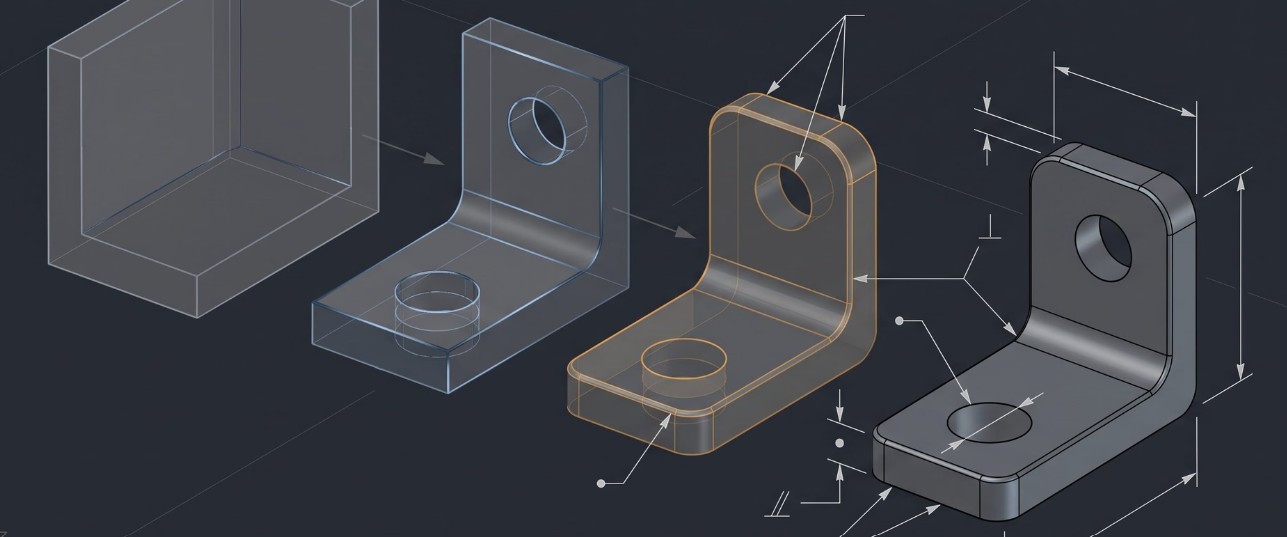
Zoo’s Text-to-CAD tool turns instructions into editable mechanical models, according to a review by Leo AI. Its Zookeeper agent translates a prompt into KCL, Zoo’s scripting language, which runs on its 3D geometry engine. The result is a parametric solid with a feature history rather than a static mesh. Engineers can adjust dimensions and modify extrusions, cuts, hole patterns, and fillets after generation.
The review recommends building a part incrementally. A user describes a base feature, checks the result, and adds the next operation. This lets engineers catch an incorrect dimension or misunderstood instruction before it affects later features. Zookeeper offers modes that trade speed for reasoning and can generate variations for design comparisons. Because manual and generated features use KCL, the model remains readable. One limitation is that sketches inside custom KCL functions cannot be edited with graphical sketch tools.
Leo considers Zoo useful for creating single parts, especially mechanical forms such as brackets, flanges, and housings. It cautions that generated geometry needs engineering review. Zookeeper cannot verify structural safety or manufacturability, and the article says it is less suited to assemblies, component fit, and complex surface shapes. Designers must check dimensions, tolerances, materials, and production requirements before releasing a part.
The review examines access and cost. Zoo offers a free plan with a monthly allowance of Zookeeper reasoning time, while paid plans add capacity and options. STEP and STL exports let teams use generated geometry in other workflows.
Leo, which sells an engineering AI assistant, argues that teams should search CAD and product data management records before generating another part. That is its commercial perspective, but it raises a design question: whether a component already exists. Zoo addresses the creation of editable geometry; the organization remains responsible for deciding whether that geometry is needed and ready to manufacture.
