

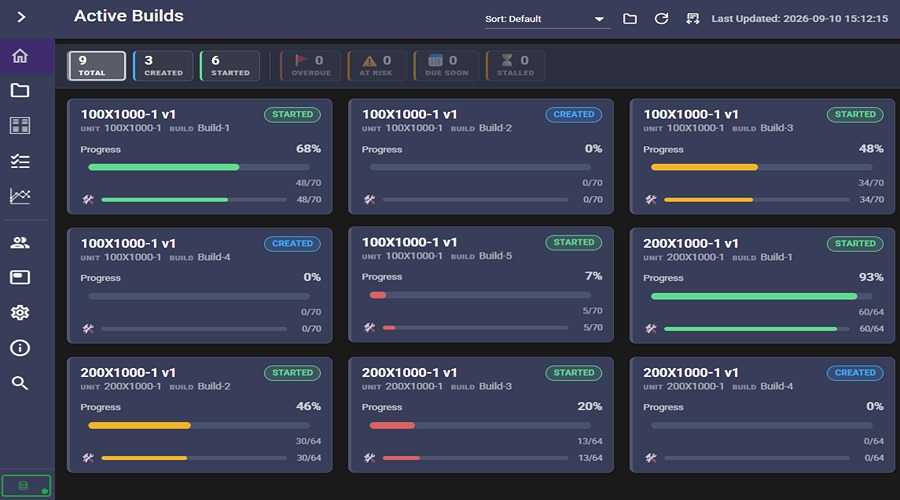
WESTFORD, MA, Sep 30, 2026 – Zuken’s Harness Builder 2027 for E3.series adds Dashboard, which tracks wire harness production as technicians complete tasks in Assembly Task Manager. The release also updates estimating, manufacturing tables and component modeling.
Dashboard Tracks Build Progress
Dashboard displays production data from Assembly Task Manager. Its Active Builds overview shows charts and tracking data. A single-build view includes start and completion dates, technician information, progress charts and timestamps for each task.
Assembly Task Manager creates digital work instructions from engineering designs. Its reusable task library stores text, images, videos and links. The software identifies tasks from a harness design’s parts list and proposes a workflow sequence. Production engineers review and sequence tasks before finalizing the work package.
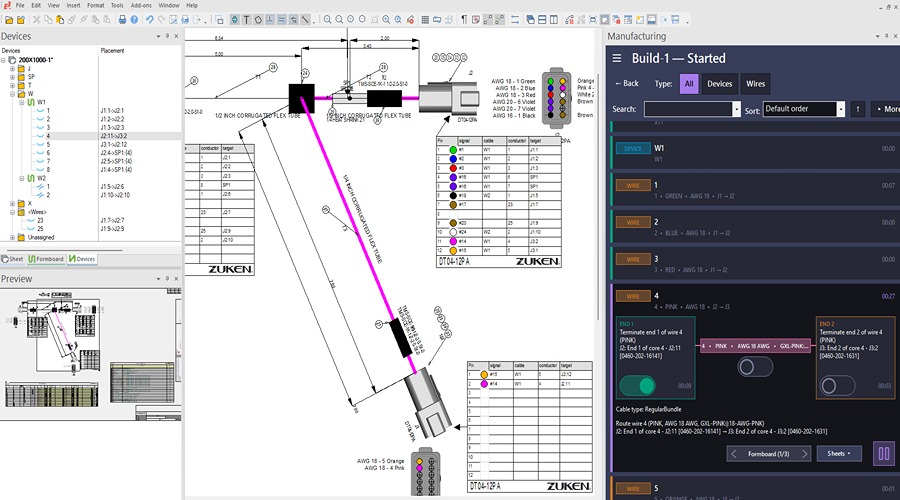
Technicians follow the instructions one task at a time, using supporting media and a digital harness representation. When they mark tasks complete, Assembly Task Manager records progress for Dashboard.
“Harness Builder connects the engineering definition of a harness with the information used to plan and track its production,” said Paul Harvell, vice president of engineering at Zuken USA. “Engineers can prepare tasks and manufacturing outputs within the design workflow, while production teams can follow the work and view build status from the same source data.”
Estimating and Table Controls
The Online Cost Estimator supports quantity-based estimates and subproject estimates for individual harnesses in complex, multi-harness designs. It also uses bulk pricing in its live price data to account for price breaks at larger order quantities.
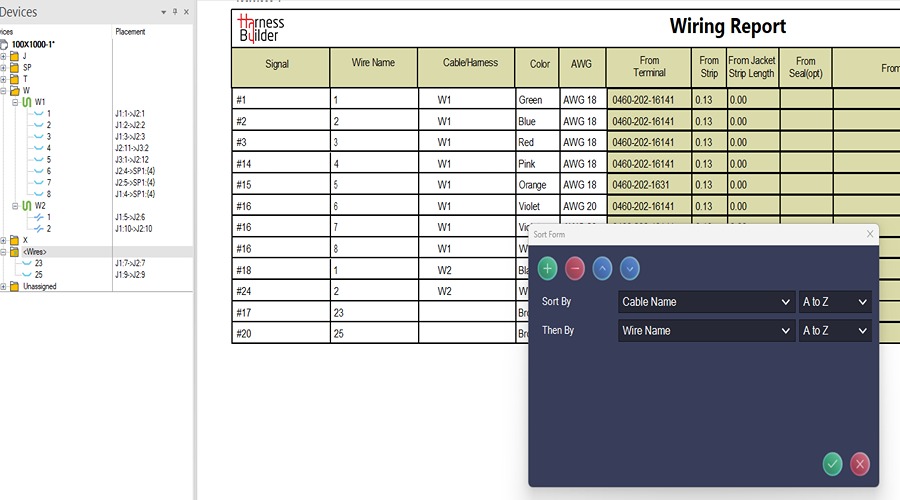
New controls apply to bills of materials (BOMs), wire run lists (WRLs) and splice tables. Multi-tier sorting organizes entries by a hierarchy of attributes. An update command can refresh tables across multiple sheets.
Connector and Cable Protection Models
BOM and WRL tables can show all three levels of a connector-with-inserts hierarchy: the housing, its inserts and the pin terminals connected to each insert.
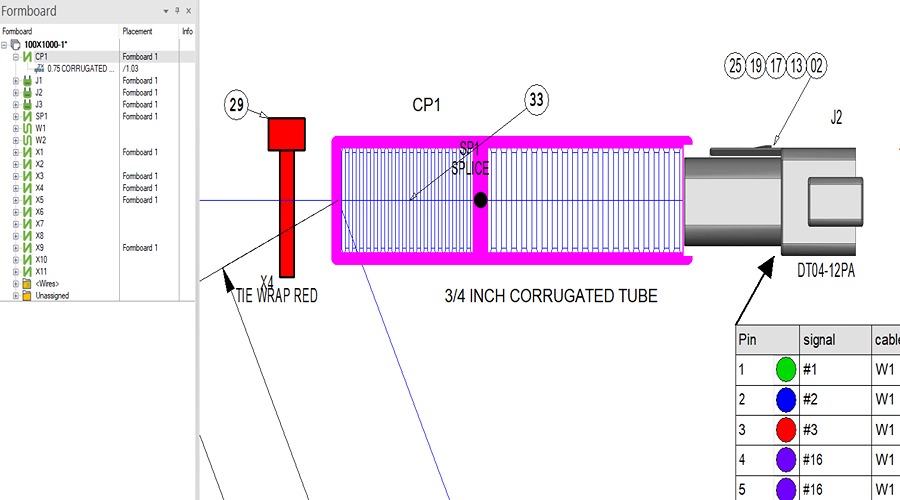
The Cable Protection utility models tubing, loom, sleeving and overbraid as one segment across a splice, rather than as separate components on either side. This representation reflects the physical assembly, improves calculations and reduces entries in the device list.
Source: Zuken
About Zuken

Zuken Inc. is a software company that develops electronic and electrical design automation tools for engineering teams. Founded in 1976 and headquartered in Yokohama, Japan, the company provides software for printed circuit board design, electrical systems, fluid systems, and 3D cabinet and wire harness layouts. Its core platforms, CR-8000 and E3.series, provide 2D and 3D system-level design environments with integrated design data and configuration management. Zuken’s software supports engineering workflows that connect design, documentation, and manufacturing processes across the product lifecycle. The company also develops tools supporting model-based systems engineering (MBSE) and digital engineering initiatives. Zuken serves industries including electronics manufacturing, automotive, aerospace, telecommunications, and industrial equipment. The company employs about 1,600 people worldwide.
