

Researchers at the University of Michigan have achieved the first three-dimensional visualization of deformation twinning within a lightweight magnesium alloy—using advanced dark-field X-ray microscopy (DXFM)—shedding new light on how these materials respond to mechanical stress, says Tech Xplore.
Magnesium alloys are appealing for lightweight structural applications—about 30% lighter than aluminum—but their limited slip systems restrict how they deform under load. Instead, when stressed in certain directions, they form deformation twins, mirror-image crystal regions that permit additional ductility. While twinning increases stretchability, excessive or poorly located twins can concentrate defects and initiate cracks.
By applying tensile stresses of 0.6 MPa, 30 MPa, and 45 MPa to a carefully chosen crystal grain, the team captured 3D images showing how twins nucleate and grow—especially at triple junctions, where three grains meet. These were consistent hotspots for defect formation.
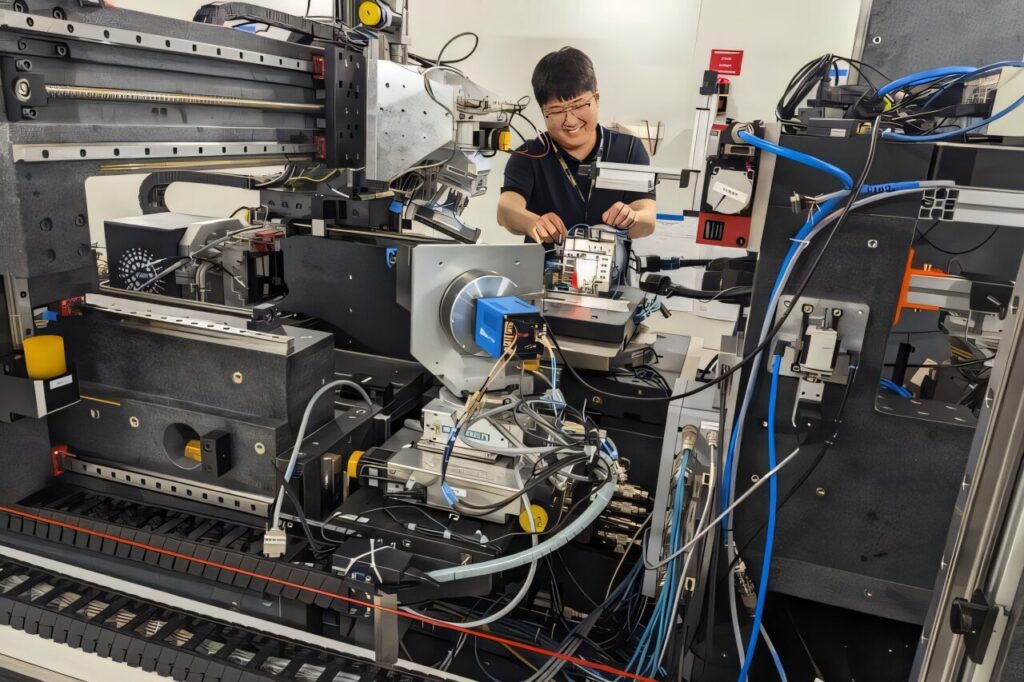
The DXFM technique—conducted at the European Synchrotron Radiation Facility—allowed non-destructive, high-resolution imaging of the evolving twinning microstructure across stress increments. Researchers literally “watched the twin appear and evolve” in real time, marking a milestone in understanding magnesium deformation.
These insights offer crucial guidance for engineers aiming to enhance the ductility–stability tradeoff in magnesium alloys. By targeting grain orientations and junctions susceptible to twinning, material lifetimes can be optimized without compromising strength.
Future work will focus on real-time in situ observation to further refine alloy design strategies for automotive and aerospace applications, where magnesium’s lightweight nature can be fully leveraged.
