

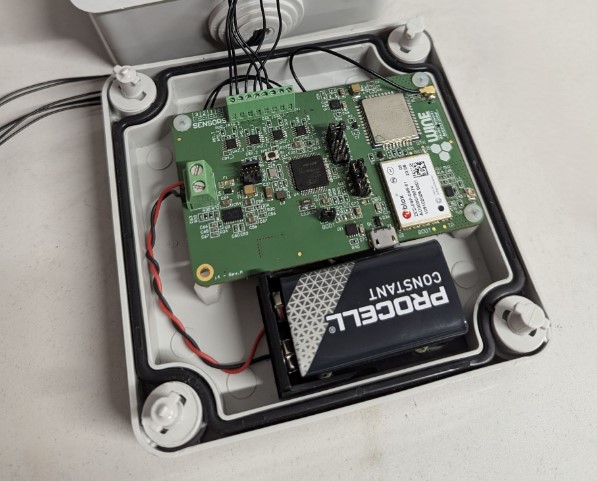
A new application of additive manufacturing is reshaping predictive maintenance in heavy industry, particularly in steel production. Researchers and engineers have developed a 3D-printed solid oxide battery designed to operate in the high-temperature, harsh conditions typical of steel plants. Unlike conventional power sources, this battery is not just a component but a tailored system integrated directly into industrial environments, tells 3D Printing Industry Blog.
Traditional predictive maintenance systems rely on wired power or replaceable batteries, both of which pose challenges in extreme settings. High heat, vibration, and accessibility constraints make maintenance costly and disruptive. The 3D-printed battery addresses these limitations by being engineered to withstand such conditions while maintaining continuous operation. Its design allows it to power monitoring systems without requiring frequent intervention.
What sets this approach apart is the combination of additive manufacturing and energy storage. By using 3D printing, the battery can be shaped to fit specific equipment or environments, enabling seamless integration into machinery. This flexibility allows sensors and monitoring devices to be deployed in locations that were previously impractical due to power constraints.
The system supports predictive maintenance by continuously powering sensors that track equipment performance. These sensors collect data on operational conditions, enabling early detection of wear, faults, or inefficiencies. In industries such as steel production, where downtime is expensive and conditions are extreme, this capability can significantly improve reliability and reduce maintenance costs.
Beyond immediate applications, the development highlights a broader trend in industrial technology. Additive manufacturing is no longer limited to producing structural parts; it is increasingly used to create functional systems, including energy devices. By embedding power generation directly into components, engineers can design more autonomous and resilient industrial systems.
The implications extend across manufacturing sectors. As predictive maintenance becomes more central to Industry 4.0 strategies, technologies that eliminate dependency on external power sources will become increasingly valuable.
This innovation represents a shift toward self-sustaining industrial infrastructure, where monitoring systems are not only intelligent but also energy-independent, enabling more efficient and reliable operations in demanding environments.
