

Luke Maximo Bell and his father, Mike Bell, have reclaimed the world’s fastest quadcopter title with a fully 3D-printed design that hit a verified average speed of 657.59 km/h (408 mph) during record attempts. The achievement reinstates their record after it was briefly held by another builder and underscores how consumer-grade tools and careful engineering can push hobbyist aircraft into extreme performance territory, tells Tom’s Hardware.
Their Peregreen V4 quadcopter reached its official speed in Cape Town, South Africa, with two runs in opposite directions to negate wind effects—the standard Guinness World Records protocol. The upwind performance alone was also impressive, touching 599 km/h (372 mph). This marks a notable improvement over earlier versions of their drone, including the 585 km/h result posted by their Peregreen 3.
The project took more than two years to refine. Central to its success was the use of a Bambu Lab H2D dual-nozzle 3D printer to fabricate the drone’s main body as a single piece, combining materials such as PETG, PA6-CF, and TPU. That large, continuous print improved aerodynamic smoothness and structural performance without depending on external fabrication.
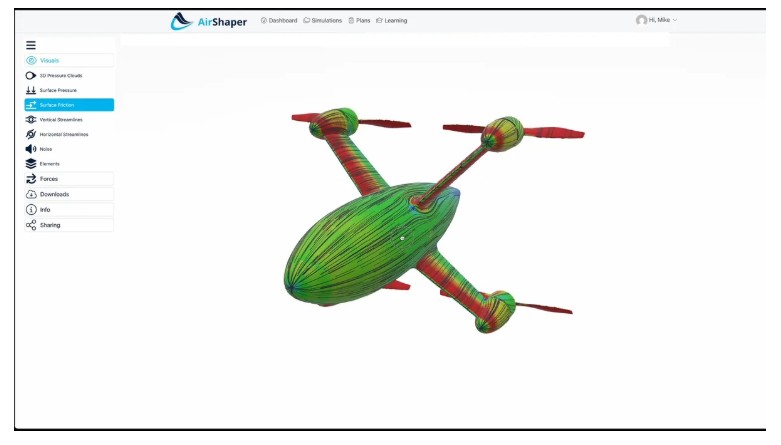
The team also tested multiple brushless motors before settling on the T-Motor 3120 unit with 900 kV windings, chosen for its balance of reliability and high rotational speed. Extensive airflow simulations using tools such as AirShaper helped shape a larger, smoother drone shell that minimized drag, and propeller blades were trimmed to optimize efficiency at speed.
The record effort reflects a broader trend in DIY aerospace and rapid prototyping: affordable additive manufacturing and accessible simulation tools are enabling individual engineers and small teams to build and test designs that once required industrial facilities. The Bells’ success shows what can be achieved with iterative design, rigorous testing, and desktop-scale tech, and it sets a new benchmark that may soon be challenged again.
