
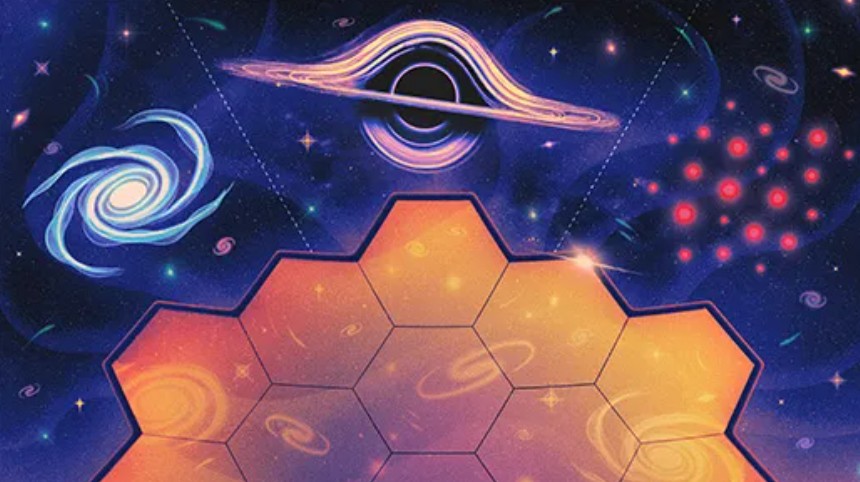
Since its launch in December 2021, the James Webb Space Telescope (JWST) has transformed astronomy by delivering observations with a level of detail that previous space telescopes could not achieve. Designed to observe the universe in infrared light, Webb can peer through cosmic dust and detect extremely distant objects, allowing scientists to study the earliest galaxies, the birth of stars, and the atmospheres of planets beyond our solar system. Its discoveries are not simply filling gaps in astronomical knowledge. They are prompting researchers to rethink some of the assumptions that have guided cosmology for decades, tells Wired.com (full article available to subscribers).
One of Webb’s most surprising findings has been the detection of large, bright, and apparently well-developed galaxies that formed much earlier than many existing models predicted. While these observations do not overturn the prevailing cosmological framework, they suggest that galaxy formation in the young universe may have occurred more rapidly or through processes that scientists do not yet fully understand. Researchers are now refining theories and running new simulations to explain these unexpected observations.
The telescope has also expanded the study of exoplanets. By analyzing starlight passing through distant planetary atmospheres, Webb has identified molecules such as water vapor, carbon dioxide, and methane, providing new clues about planetary composition and habitability. These observations are helping astronomers compare worlds beyond the solar system with planets closer to home and improving their understanding of planetary evolution.
Beyond its scientific discoveries, Webb is changing the way astronomy is conducted. The telescope generates enormous volumes of high-quality data that encourage collaboration among researchers worldwide and inspire new questions rather than simply confirming existing theories. Many astronomers now view the mission as the beginning of a new era in observational science, where unexpected results drive future research.
Rather than providing definitive answers, the James Webb Space Telescope is revealing a universe that is more complex than previously imagined. Its observations continue to refine scientific understanding, challenge established ideas, and expand humanity’s view of the cosmos, ensuring that astronomers will be interpreting its discoveries for many years to come.
