

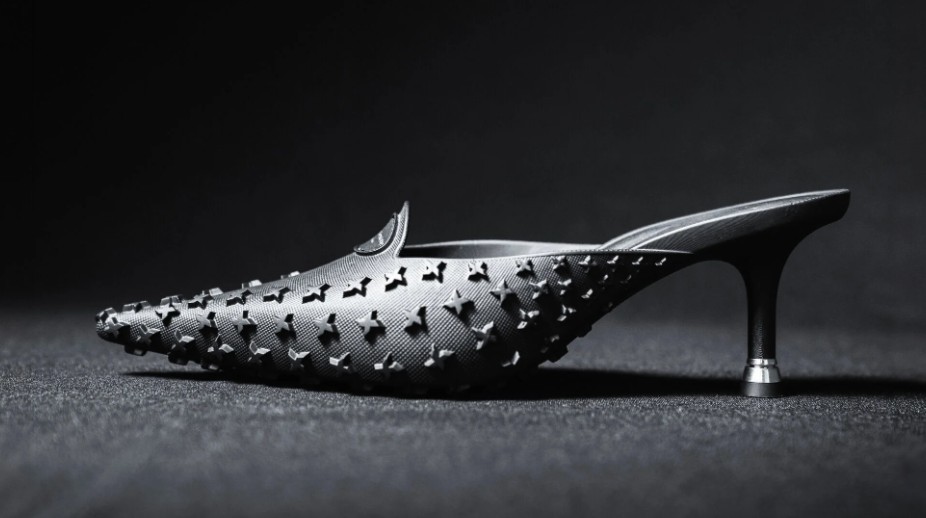
Fashion designer Alexander Wang has introduced Griphoria, described as the first commercially available wearable 3D-printed stiletto, marking a significant step for additive manufacturing in luxury footwear. Developed over six years in collaboration with Carbon and footwear software company HILOS, the shoe combines advanced engineering with high-fashion aesthetics, tells 3D Printing Industry Blog.
The Griphoria design addresses one of the biggest technical barriers in 3D-printed footwear: creating a thin, high-heeled structure capable of supporting body weight without cracking or deforming. Unlike sneakers or flat footwear, stilettos require exceptional structural stability because the heel concentrates pressure into a narrow point. Wang’s team reportedly spent years refining prototypes and validating materials before releasing the product commercially.
Manufactured primarily from elastomeric polyurethane, the shoe is produced using Carbon’s Digital Light Synthesis technology, a process known for precision and speed. The pointed-toe mule features embedded star-shaped studs and branding integrated directly into the printed structure, creating a seamless silhouette without conventional assembly methods or molds. The design is fabricated in Italy and sold exclusively in black for $795.
The article emphasizes that Griphoria represents more than a fashion statement. By eliminating molds and streamlining production into a largely digital workflow, the manufacturing process reduces waste and shortens production timelines from weeks to hours. HILOS’ software platform connects digital design directly to manufacturing, reducing the number of intermediate steps common in traditional footwear production.
The release also reflects a broader movement in luxury fashion toward additive manufacturing. Brands including Gucci, Hugo Boss, and Mallet London are increasingly using 3D printing to experiment with customization, faster production cycles, and reduced material waste. Griphoria suggests that 3D printing is evolving from a niche design experiment into a viable production method for premium consumer products.
