

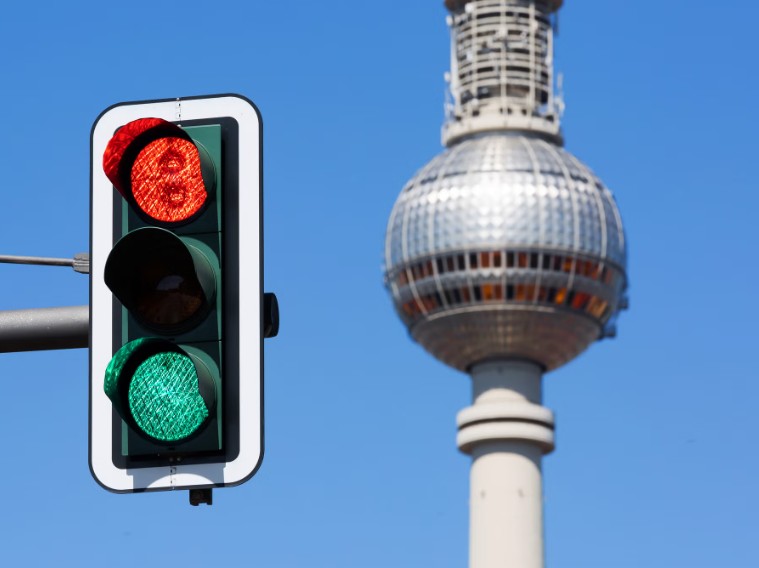
A long-standing standard in road systems, the three-color traffic light may soon face a significant upgrade as engineers explore adding a fourth signal: white. The proposal, highlighted in North Carolina State University research and discussed in Popular Mechanics, reflects the growing influence of autonomous vehicles on infrastructure design. Rather than replacing red, yellow, and green, the white light would introduce a new operational mode tailored to mixed traffic environments where human drivers and self-driving cars coexist.
The concept hinges on the unique capabilities of autonomous vehicles, which can communicate with one another and with traffic systems in real time. When enough of these vehicles approach an intersection, the system would activate a “white phase.” During this phase, control of traffic flow effectively shifts from the signal itself to the networked vehicles, which coordinate movement more efficiently than traditional stop-and-go cycles. Human drivers, in turn, would be instructed to follow the vehicle ahead, simplifying decision-making in complex intersections.
Simulation results suggest measurable benefits. Even with a relatively small proportion of autonomous vehicles, traffic delays can decrease modestly, while higher adoption rates yield more significant improvements in flow and energy efficiency. This distributed approach also avoids the bottlenecks associated with centralized traffic control systems, instead leveraging the collective computing power of connected vehicles.
Despite its promise, the idea remains conceptual. Implementing a new traffic light color would require widespread infrastructure upgrades, as many existing signals are not equipped to handle such changes. Early adoption is more likely in controlled environments, such as ports or dedicated corridors, where autonomous vehicles are already more prevalent.
The proposal ultimately points to a broader shift: as vehicles become more intelligent and interconnected, traditional traffic systems may evolve from rigid rule-based signaling to dynamic, cooperative control. The white light is less about adding another color and more about redefining who, or what, manages the flow of traffic.
