

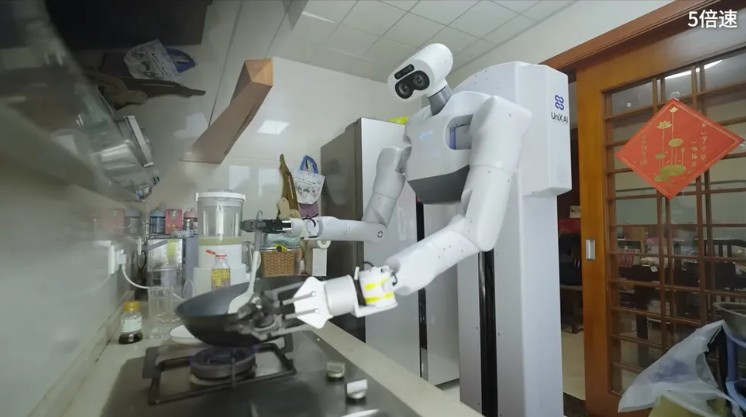
A new humanoid robot is being positioned as a practical solution for everyday household labor, signaling a shift from experimental robotics to early consumer deployment. Developed by Chinese company UniX AI, the robot, called Panther, is designed to handle routine domestic tasks such as making beds, cleaning surfaces, and preparing simple meals, tells Live Science.
Panther stands about 5 feet 3 inches tall, weighs roughly 80 kilograms, and can operate for up to 12 hours on a single charge. Its makers have already begun commercial deliveries, suggesting confidence that the system can function beyond controlled demonstrations. Promotional footage shows the robot navigating typical home environments and performing chores with a level of coordination that reflects recent advances in robotics and artificial intelligence.
The development highlights a broader ambition within the robotics industry: to create general-purpose machines capable of working in human-centered spaces. Unlike specialized devices such as robotic vacuums, humanoid systems such as Panther are intended to adapt to existing homes without requiring structural changes. Their humanlike form allows them to use common tools and interact with everyday objects, potentially expanding their usefulness across a wide range of tasks.
However, the claim that such robots are “ready” for homes remains open to scrutiny. Demonstrations typically occur in controlled settings, where variables are limited and tasks are simplified. Real households introduce unpredictability, clutter, and safety concerns that challenge even advanced systems. Reliability, cost, and user trust will ultimately determine whether robots such as Panther move beyond early adoption into widespread use.
Even so, Panther represents a notable milestone. It reflects a growing convergence of AI, perception systems, and mechanical design, bringing the long-promised vision of a general-purpose household robot closer to reality, while underscoring the gap that still separates capability from everyday dependability.
