

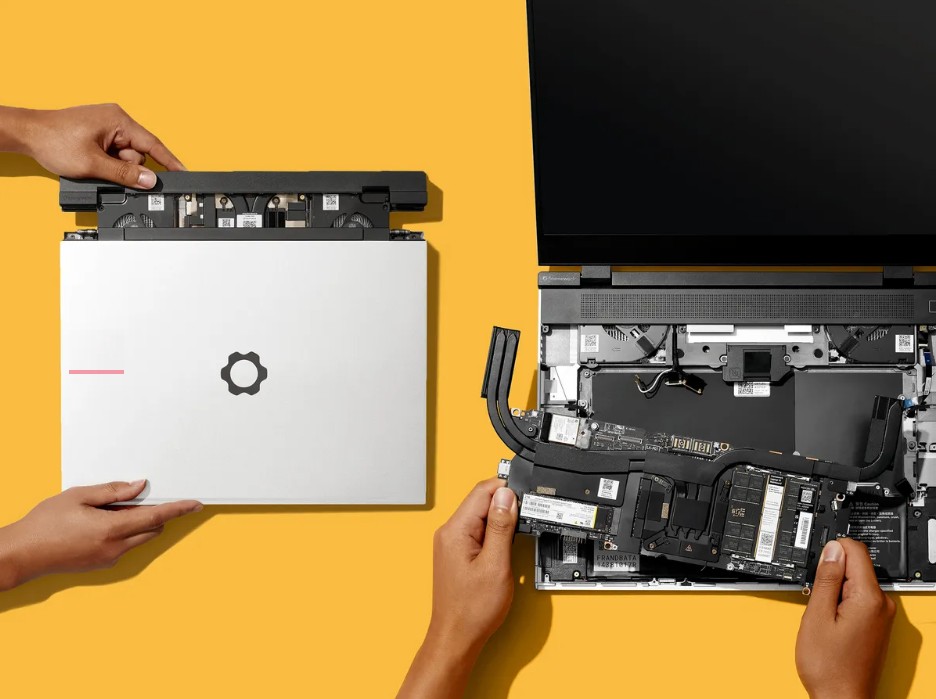
Framework, known for its repairable and modular laptops, has released a swappable GPU module featuring the Nvidia RTX 5070 that fits into its Framework 16 line, tells IEEE Spectrum. This marks a major shift: for the first time in many years, laptop users can upgrade the graphics processor with just a screwdriver. Previously, laptop GPUs have typically been soldered onto the motherboard, making upgrades impossible.
The RTX 5070 module joins the existing module powered by AMD’s RX 7700S. Both modules plug into the same custom interposer in the framework of Framework 16 laptops. Framework designed the RTX 5070 module such that its size, thermal performance, and power draw closely match the RX 7700S, making the swap feasible without redesigning the laptop shell or cooling system.
To support the new GPU module’s power demands, Framework also introduced a 240-watt USB-C power adapter—an increase over their previous 180-watt adapter. Interestingly, the new module isn’t just about performance: it accepts power input via the USB-C port, in addition to handling display output and data over the interposer.
Framework and Nvidia started working on this collaboration in 2024, aiming to meet a demand for more upgradable components in laptops. The RTX 5070 is built on Nvidia’s newer Blackwell architecture, giving a performance boost over the previous AMD-based option. At the same time, the AMD module remains available and relevant, especially among Linux users who prefer open-source driver support.
In essence, this move could usher in a new laptop design paradigm: one where graphics upgrades are possible without trashing the whole device. Framework’s approach addresses what many see as the missing link for laptops: desktop-level flexibility in graphics. Challenges remain, especially around standardization (something MXM tried but never fully solved), but for now, Framework is offering one of the first working solutions.
