

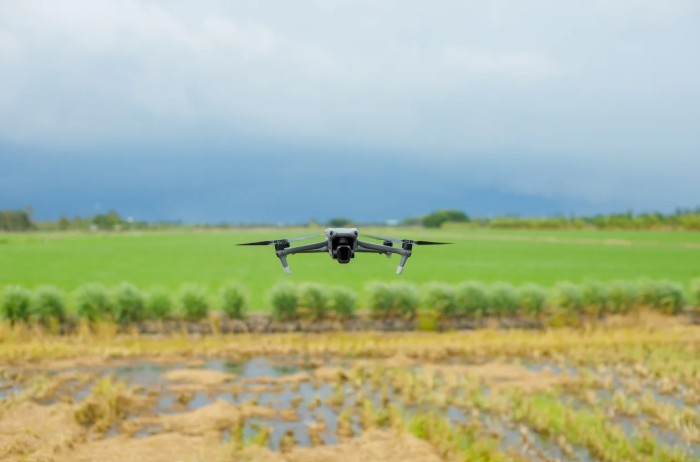
Aerospace engineering is now contributing beyond aircraft and spacecraft. Techniques and systems once developed for extreme-performance missions are being applied to real-world challenges tied to climate instability, particularly in agriculture and environmental monitoring, says Design News. Engineers are adapting rigorous aerospace methodologies, such as sensor fusion, predictive modeling, and real-time data interpretation, to help societies anticipate and respond to climate-induced stresses.
Precision and reliability have always defined aerospace. In flight control systems, decision-making depends on combining multiple sensor inputs into a coherent, trustworthy picture, a process known as sensor fusion. That same technique now helps farmers and crop managers interpret sprawling datasets that track soil chemistry, humidity, leaf temperature, and weather trends. Rather than reacting after damage occurs, growers and land stewards can forecast where stress or disease will strike, allowing targeted intervention that saves water, cuts chemical use, and stabilizes yields.
Unmanned aerial systems are among the most visible bridges between aerospace and climate resilience. Drones equipped with advanced sensors map irrigation patterns and soil moisture with precision and speed, covering terrain that would be too dangerous or time-consuming for human workers. Algorithms that once guided aircraft through turbulent skies are repurposed to detect early signs of crop stress or erosion that might otherwise go unnoticed.
Artificial intelligence and machine learning play central roles in this transformation. Aerospace-derived AI models can synthesize massive streams of environmental data into actionable insight. In one research project cited in IEEE, AI was able to identify crop disease with nearly 98% accuracy from early multispectral imagery, spotting issues days before they were visible to the naked eye.
The shift from reactive to proactive climate management reflects a broader trend: aerospace technology is no longer confined to jet engines and satellites. Its analytical frameworks, robust sensors, and intelligent data processing are becoming tools for sustainability, helping agriculture, disaster response, and environmental monitoring cope with a more unstable climate.
