

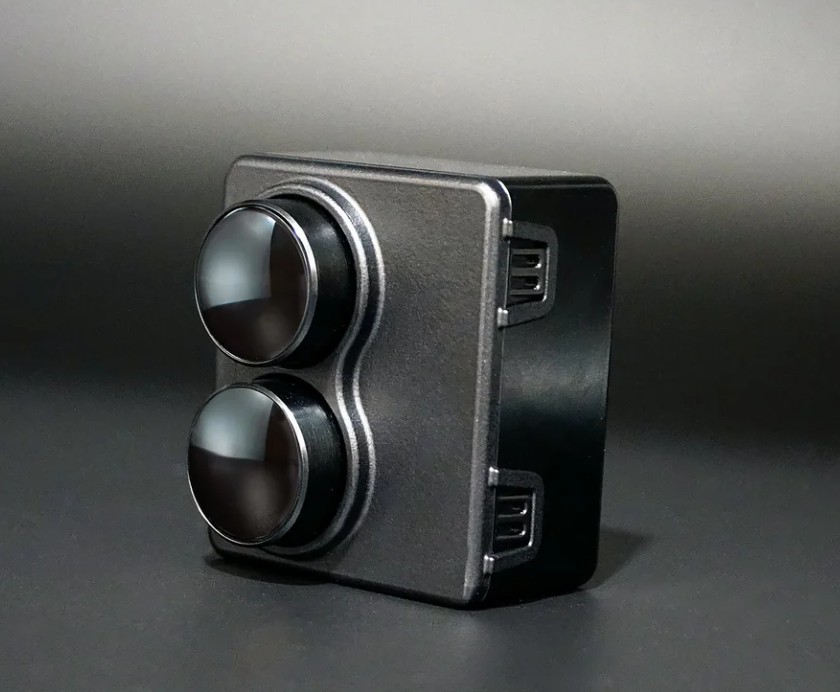
In a recent article in IEEE Spectrum, engineers and industry observers look at a fresh push toward low-cost solid-state lidar that could change how vehicles sense their surroundings. At the heart of this shift is MicroVision’s Movia S solid-state lidar sensor set to target production pricing below U.S. $200. Traditional automotive lidar systems cost thousands or even tens of thousands of dollars, which limits their use to premium or prototype autonomous vehicles. Achieving sub-$200 pricing would make precise three-dimensional sensing practical for mass-market advanced driver assistance systems (ADAS) rather than just high-end autonomy.
MicroVision’s design uses a solid-state architecture rather than spinning mechanical parts. A network of lasers sends 905-nanometer pulses and measures return time to calculate depth, creating a real-time 3D picture of the scene ahead. The sensor covers about 180° horizontally and can detect objects out to roughly 200 meters in good conditions. Crucially, it is built without moving components, which improves durability and supports integration into production vehicles.
Lower cost doesn’t come without trade-offs. Solid-state systems typically have narrower fields of view than traditional rotating lidar units, meaning multiple units may be needed around a vehicle to achieve full coverage. That adds system complexity—alignment, calibration, and data fusion become more important. Still, even with a few low-cost units, total system costs can remain lower than with a single mechanical lidar.
Industry experts say this cost break could widen lidar’s market beyond niche autonomous vehicles to more mainstream ADAS applications. Rather than replacing cameras or radar, affordable lidar would augment them, offering redundant and more accurate 3D perception in complex driving scenarios. That integration could improve safety and bring better sensing to everyday cars.
