

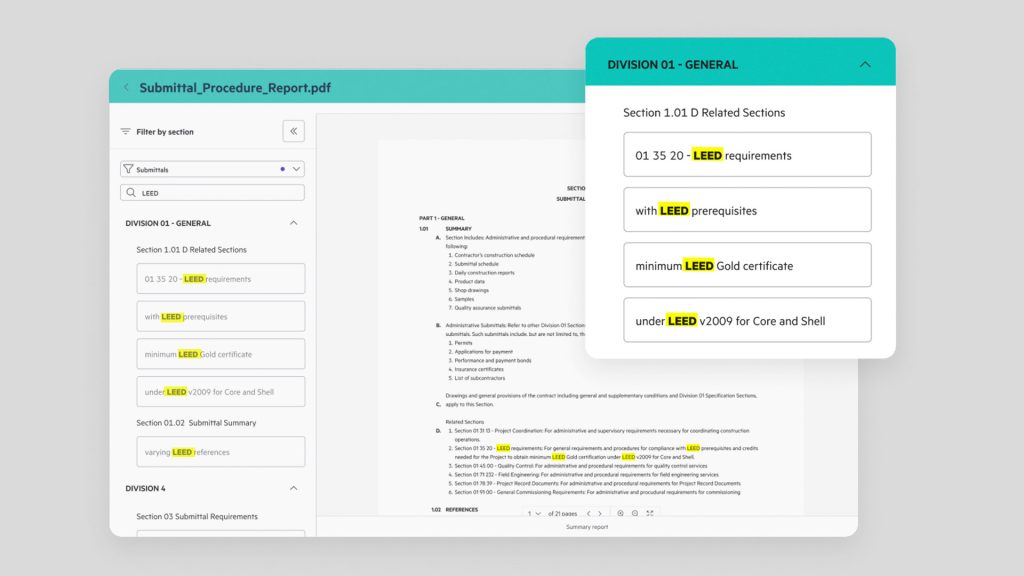
Egnyte is embedding “secure, domain-specific” AI agents into its platform to automate tedious but crucial tasks in the architecture, engineering, and construction (AEC) industry. Their two flagship agents, the Specifications Analyst and the Building Code Analyst, are intended to make sense of dense spec documents and building codes, helping firms avoid costly mistakes, says AEC Magazine.
The Specifications Analyst ingests large or multiple specification documents and transforms them into structured data. Users can filter by materials, subsections, or tables of contents to zero in on relevant clauses. This helps teams rapidly extract requirements and compare specs across divisions. The Building Code Analyst, on the contrary, merges different codebooks, i.e., state, municipal, and county, into a unified referential base. It lets users compare and check code provisions, flag contradictions, and surface key passages with links to source text.
Egnyte emphasizes security and governance. The AI agents operate on data inside the Egnyte repository; they don’t require users to move their documents elsewhere. This limits exposure and helps preserve compliance and control. Yet they also draw on external data, which helps keep their output up-to-date with the latest code amendments or standards changes.
By automating spec reading and code analysis, these agents promise to reduce risk, prevent errors, and speed project cycles. A minor misinterpretation of a spec or code clause can lead to major delays or cost overruns in construction, all of which the new tools aim to help avoid.
Overall, Egnyte’s move shows how domain-aware AI is pushing further into AEC, not just as a generic assistant but as a specialist in standards, regulation, and content-intensive workflows. As the agents mature, they could become indispensable in bridging design, compliance, and execution.
