

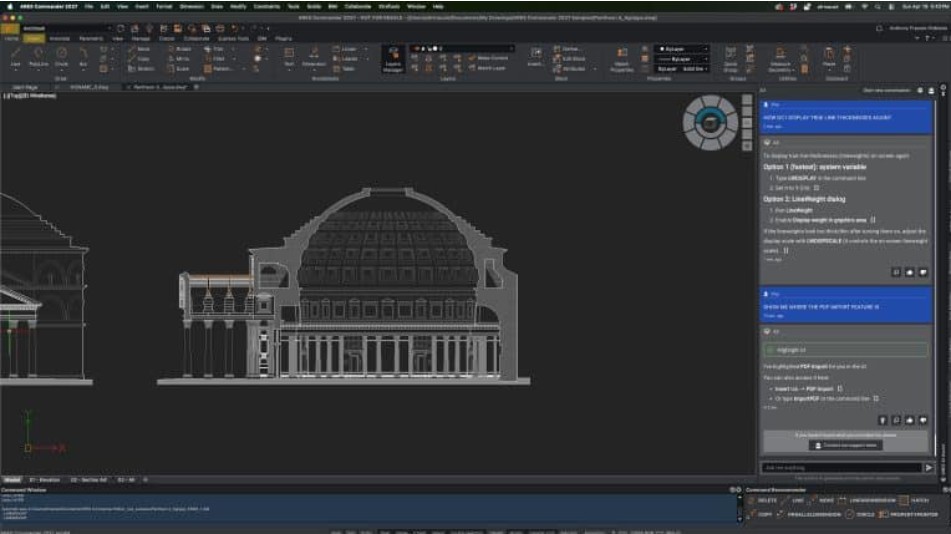
The latest developments in Graebert’s ARES 2027 CAD platform reflect a broader transformation occurring across architecture, engineering, and construction software. A recent analysis from Architosh explores how the company is integrating artificial intelligence, BIM interoperability, and automation tools directly into DWG-based workflows traditionally associated with 2D drafting environments.
ARES 2027 introduces a growing set of AI-assisted functions designed to automate repetitive drafting and documentation tasks. Rather than positioning AI as a replacement for designers, Graebert frames the technology as a workflow accelerator capable of reducing manual effort in annotation, object recognition, file organization, and drawing updates. The article notes that the platform’s automation strategy focuses heavily on practical engineering and architectural tasks instead of experimental generative design concepts.
A major emphasis of the release is improved BIM-to-DWG integration. Architectural and engineering firms often struggle to move information cleanly between BIM authoring tools and conventional CAD environments used for detailing, contractor coordination, and legacy documentation. Graebert’s updated workflow tools aim to simplify that exchange by enabling BIM data to flow into DWG-based drafting processes more efficiently while preserving metadata and object intelligence.
According to the article, the platform also expands cloud-connected collaboration features across desktop, mobile, and browser environments. Engineers and architects can access synchronized project data from multiple devices while maintaining compatibility with industry-standard DWG files. Graebert positions this interoperability as a competitive advantage in an industry where fragmented software ecosystems frequently slow project coordination.
The article highlights the growing demand for hybrid workflows that combine BIM data structures with the speed and flexibility of traditional CAD drafting. Many firms continue to rely on DWG-based production processes even as BIM adoption expands, particularly in renovation work, infrastructure projects, and consultant coordination. ARES 2027 appears designed to bridge those environments rather than forcing organizations into entirely new workflows.
Architosh also frames the release within a broader shift occurring across AEC software markets. AI capabilities are increasingly being embedded directly into production tools, not as standalone assistants but as integrated workflow systems that support documentation, collaboration, and model coordination. Graebert’s strategy suggests that future CAD platforms may evolve into intelligent production environments where BIM data, automation, and cloud collaboration operate together inside familiar drafting ecosystems.
