

Industrial collaboration is entering a new phase, shaped by the convergence of artificial intelligence, digital twins, and immersive environments. The Machine Design article highlights how research organizations are rethinking collaboration by blending human expertise with intelligent, interactive systems.
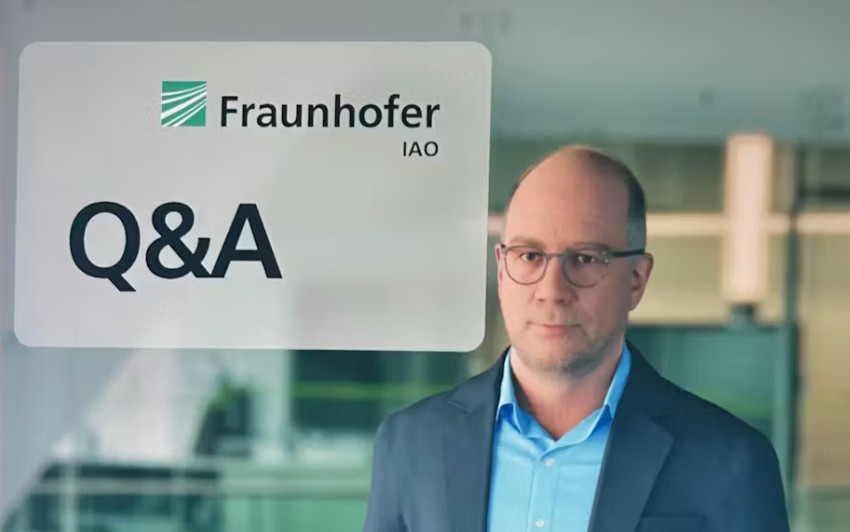
At the center of this shift are photorealistic AI avatars designed to replicate real individuals. One example is a digital counterpart of a Fraunhofer Institute director, capable of answering questions in real time. These avatars combine large language models with localized knowledge systems, enabling them to deliver context-aware insights during engineering discussions.
Alongside avatars, digital twins are playing a growing role in collaborative workflows. These virtual representations of people, systems, or processes allow teams to simulate scenarios, visualize outcomes, and test decisions before implementing them in the physical world. By pairing digital twins with immersive visualization tools, engineers and stakeholders can interact with complex systems in more intuitive ways.
The technologies are being showcased as part of broader efforts to bring the industrial metaverse closer to reality. At events such as Hannover Messe, demonstrations include immersive environments where users can engage with digital models, AI-driven assistants, and real-time data streams. These setups aim to break down traditional barriers between disciplines, enabling more fluid communication across engineering, operations, and management teams.
The ultimate goal is faster and more informed decision-making. By embedding intelligence directly into collaborative environments, these systems reduce the need to search for information or rely on static documentation. Instead, insights are generated dynamically, allowing teams to respond quickly to changing conditions.
The article frames this evolution as a shift from tool-based collaboration to experience-driven interaction. As AI avatars and digital twins mature, industrial collaboration is expected to become more interactive, data-rich, and continuous, fundamentally changing how teams design, analyze, and operate complex systems.
