

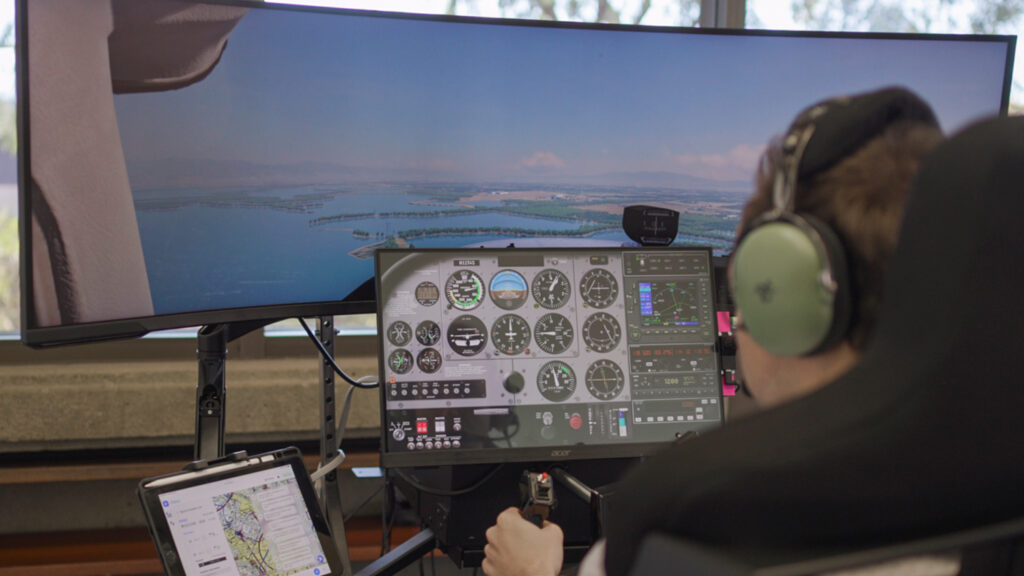
Stanford researchers have joined the U.S. Air Force Test Pilot School in a project to evaluate whether artificial intelligence can serve as a trusted copilot in critical flight situations. The collaboration used both a sophisticated flight simulator at Stanford and real in-aircraft testing aboard a Learjet 25 at Edwards Air Force Base in California. The goal was to see if AI could assist pilots in emergencies by rapidly identifying relevant procedures, scenarios, and data that are difficult to access under pressure, tells Stanford Report.
The AI system tested operates as an advanced decision support tool rather than an autonomous pilot. It runs on common hardware such as an iPad and uses techniques like retrieval-augmented generation to quickly surface crucial information from manuals, checklists, and flight procedures. In simulations and live tests, the system helped pilots respond to complex situations by suggesting actions, reducing cognitive load, and presenting context-specific guidance within seconds. The approach aims to cut through the time pressure and information overload that can accompany in-flight anomalies.
Researchers emphasize that the intent is not to replace human pilots but to enhance safety and performance by augmenting human decision-making. Pilots retain ultimate control and judgment, with the AI providing supplemental insight when unexpected events occur—moments when traditional checklists and training may not address every variable. The combined simulator and in-aircraft evaluations help researchers understand human–AI interaction dynamics and refine the system’s usefulness in real-world environments.
This work reflects broader efforts to integrate AI into safety-critical systems like aviation, where reliability and trustworthiness are paramount. Evaluating AI copilots in live flight conditions allows engineers and test pilots to observe how these tools perform under stress and how pilots respond to AI-generated suggestions. While more research and testing remain before widespread adoption, the results point to a future where human pilots and AI copilots work together to improve safety margins in aviation.
