

Artificial intelligence has moved from being another software trend to the primary force reshaping computer system design. While consumer devices such as PCs, phones, and TVs have improved incrementally, the real disruption comes from large language models, chatbots, and early AI agents. These workloads have fundamentally changed how systems are built, from personal devices to hyperscale data centers.
On the client side, modern PCs and smartphones now include neural processing units to run AI models locally. The deeper transformation, however, is happening in servers and data centers. Traditional CPU-centric architectures remain necessary, but nearly all new AI applications depend heavily on graphics processing units. GPUs have become essential not for graphics, but for the massive parallel computation AI requires.
This shift has sparked intense competition among chipmakers, says PC Mag. Nvidia continues to dominate AI training with frequent data-center-focused chip releases, while AMD has emerged as a serious challenger with its Instinct line. At the same time, cloud providers have developed their own AI silicon, primarily for inference, including Google’s TPUs, Amazon’s Trainium, and Microsoft’s Maia. The scale of demand is so large that future AI data centers may require dedicated power generation, including nuclear energy.
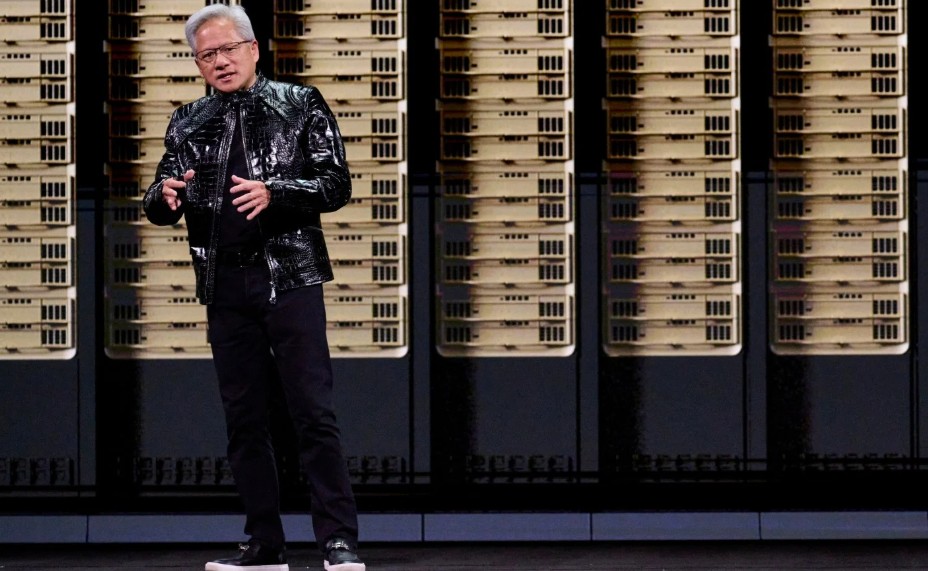
A key change highlighted at CES 2026 was the move toward full systems design. GPU vendors are no longer just supplying chips; they are delivering complete rack-scale systems optimized for AI. Nvidia’s Vera Rubin platform and AMD’s Helios exemplify this approach, combining GPUs, CPUs, networking, and data-processing units into tightly integrated designs that prioritize efficiency as much as performance.
This systems-level focus is driven by exploding compute demand. AI workloads have grown from zettaflops to hundreds of zettaflops in just a few years, with projections calling for a hundredfold increase again. Efficiency, especially power efficiency, has become critical as data center growth outpaces available electricity.
Alongside this, “hybrid AI” is emerging, spanning cloud, edge servers, PCs, and phones. AI is now embedded across the computing landscape, signaling that today’s changes are only the beginning of a far larger transformation.
