

Lithium-ion batteries dominate today’s electric vehicles and energy storage systems, but they depend on critical minerals such as lithium, cobalt, nickel, and graphite that face supply chain and cost challenges. Sodium metal batteries offer an appealing alternative because sodium is about 1,000 times more abundant than lithium and costs roughly one-hundredth as much by weight. However, sodium’s high chemical reactivity has made it difficult to develop batteries that combine fast charging with long-term stability. MIT researchers have now addressed this challenge by rethinking electrolyte design, focusing on the solvent molecules that surround sodium ions.
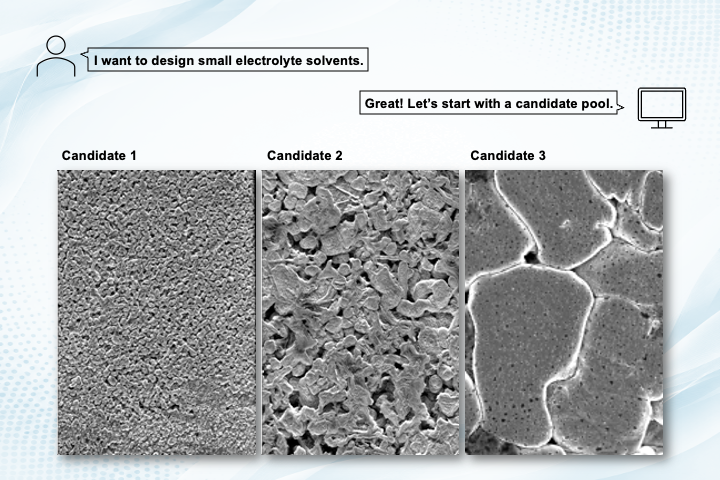
Instead of relying on conventional trial-and-error experiments, the team developed a machine learning guided pipeline that rapidly generates and evaluates large pools of solvent candidates. Their approach narrows the search to the most promising electrolyte formulations before validating them experimentally. This greatly accelerates the discovery process while reducing the time and effort needed to identify effective electrolyte recipes.
The researchers found that two molecular characteristics, solvent size and molecular similarity, are key to designing better electrolytes. Smaller solvent molecules improve sodium ion transport, while selecting chemically similar molecules helps create a stable solid electrolyte interphase on the sodium metal surface. This protective layer is essential because it prevents unwanted reactions, enables uniform sodium deposition, and extends battery life. By balancing these properties, the new electrolyte design achieves both faster cycling and greater stability, overcoming a long-standing tradeoff in sodium metal batteries.
Beyond improving sodium metal batteries, the researchers believe their framework establishes a broader strategy for electrolyte discovery. Rather than focusing solely on one battery chemistry, the design principles can guide the development of electrolytes for a variety of next-generation energy storage technologies. The work demonstrates how artificial intelligence, molecular science, and experimental validation can work together to accelerate materials discovery and bring lower-cost, resource-abundant batteries closer to practical deployment for electric vehicles and large-scale grid energy storage.
