

A new AI image-generation tool from Google, widely known as Nano Banana, is rapidly influencing architectural visualization by shifting the focus from manual modeling to intent-driven design. Its viral rise is not just a social media phenomenon but a signal of deeper changes in how architects produce and communicate visual ideas, says this article from the Architizer blog.
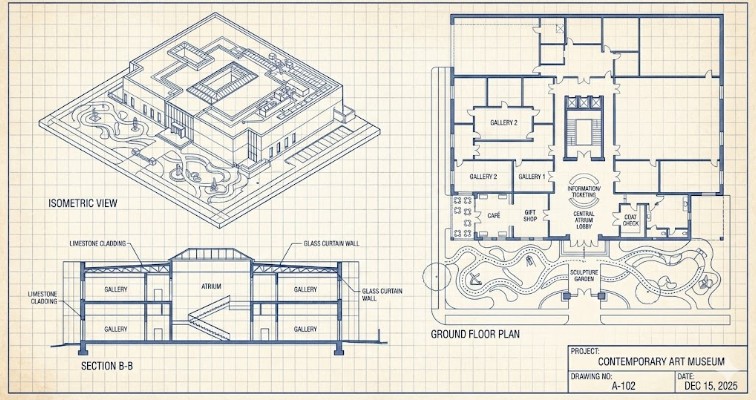
What sets Nano Banana apart is its ability to interpret architectural inputs with a level of spatial awareness that earlier tools lacked. Instead of treating drawings as abstract visuals, it can “read” floor plans and understand them as instructions, generating images that preserve layout logic and spatial relationships. This capability addresses a long-standing limitation in AI-generated imagery, where outputs often looked visually appealing but structurally incoherent.
The tool’s speed is equally transformative. Designers can move from concept to visualization in seconds, testing materials, lighting, and perspectives without building detailed 3D models. This rapid iteration compresses workflows that traditionally required hours or days, making visualization more accessible during early design stages. The result is a more fluid creative process, where ideas can be explored and refined in real time.
At the same time, Nano Banana is reshaping professional roles. Architectural visualization has long relied on specialized artists skilled in rendering software. As AI tools automate much of this production work, the emphasis shifts toward curating outputs, refining prompts, and making design decisions rather than executing every visual detail manually. The technology does not eliminate expertise but redirects it toward higher-level creative control.
However, limitations remain. AI-generated images can still misinterpret complex geometry or produce inconsistencies, particularly in detailed or technical projects. Human oversight is essential to ensure accuracy and feasibility, especially when visuals move beyond conceptual exploration.
The broader impact lies in a change of mindset. Visualization is no longer constrained by technical barriers but driven by description and intent. As tools such as Nano Banana evolve, they point toward a future where expressing an idea may be as powerful as modeling it, fundamentally altering how architects design, iterate, and communicate their work.
