

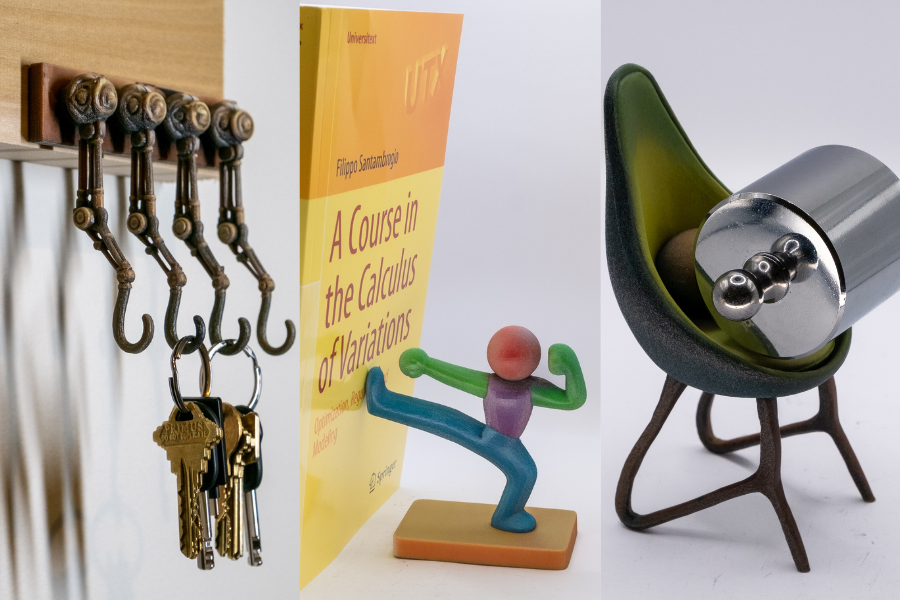
MIT researchers at the Computer Science and Artificial Intelligence Laboratory created a system called PhysiOpt that brings physics into generative AI design, tells MIT News. Standard text-to-3D tools can generate creative shapes but often ignore structural realities, so a chair generated by AI might collapse under weight or have disconnected parts. PhysiOpt runs quick physics simulations on these designs and adjusts them so they can actually withstand real-world forces and usage.
Users type a description or upload an image and specify how much force or weight the object should support. In about half a minute, the system returns a 3D model that balances the creative intent with functional integrity. MIT researchers tested prompts such as a flamingo-shaped glass, which was printed with a stable base and handle suitable for actual use.
Behind the scenes, PhysiOpt iterates through simulation and tweaks, keeping the object’s overall look while reinforcing areas that would fail under stress. That lets the system preserve aesthetics without sacrificing usability. The team found PhysiOpt generated realistic, usable designs far faster per iteration than some earlier methods and with higher structural fidelity.
This work addresses a key shortcoming in generative design: AI can imagine almost anything but doesn’t inherently know whether a design will stand up, balance loads, or survive everyday use. By embedding physics checks early in the design loop, PhysiOpt closes that gap. The result is a tool where creative freedom and real-world performance coexist, and where personalized items from cups and keyholders to furniture have a significantly better shot at going from screen to durable reality.
