

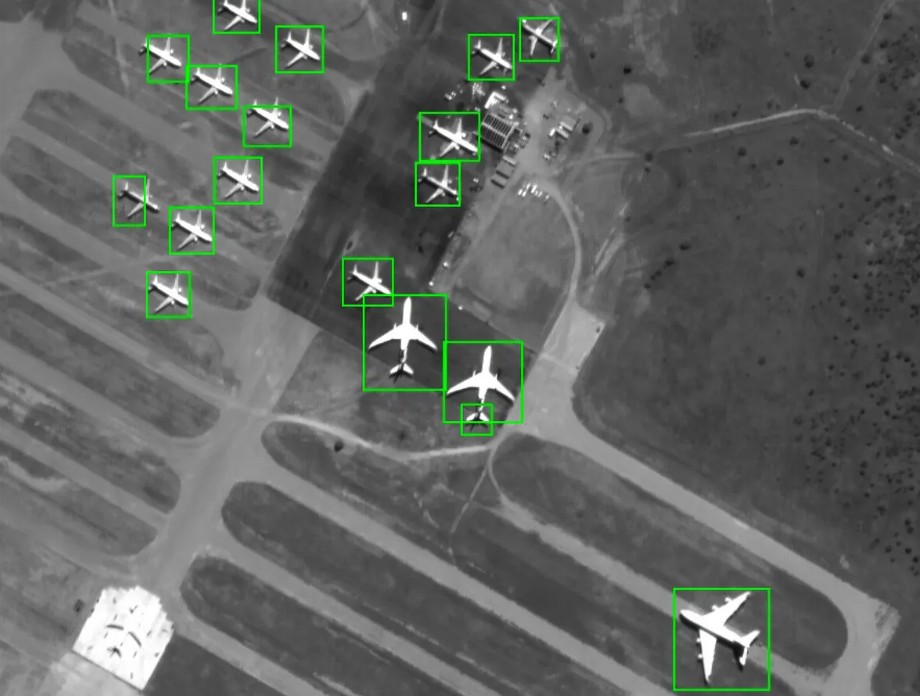
Artificial intelligence is rapidly transforming Earth observation satellites from passive imaging systems into autonomous analytical platforms. An article from IEEE discusses how AI-enabled spacecraft are beginning to process information directly in orbit instead of sending enormous quantities of raw data back to Earth for later analysis. This shift could dramatically improve the speed, efficiency, and responsiveness of satellite operations.
Traditional Earth observation satellites continuously capture huge streams of imagery and sensor data, much of which is never useful because of cloud cover, redundant observations, or transmission limitations. AI systems running onboard satellites can now identify meaningful events in real time, filter irrelevant images, compress information, and prioritize only the most valuable data for transmission. The result is lower bandwidth demand, reduced latency, and faster decision-making during environmental crises or natural disasters.
The article highlights emerging missions such as the European Space Agency’s Phi-Sat program, which uses onboard AI chips to remove cloud-obscured images before they are transmitted to Earth. Other systems are experimenting with autonomous wildfire detection, flood monitoring, methane leak identification, and agricultural analysis. These capabilities are increasingly important as satellite constellations expand and global demand for environmental intelligence rises.
AI processing in space also addresses a growing operational problem: satellites produce more data than ground infrastructure can realistically manage. By moving computation closer to the source, space agencies and private firms hope to reduce communication bottlenecks while enabling near-real-time Earth monitoring. Researchers are also exploring “edge AI” systems capable of adapting onboard without requiring constant retraining on Earth.
The broader implication is that Earth observation may evolve from a delayed imaging workflow into a distributed intelligent sensing network. Satellites could eventually cooperate autonomously, identify unusual planetary activity, and coordinate observations without direct human control. As AI hardware becomes smaller and more energy efficient, the line between spacecraft and autonomous scientific agents is beginning to blur.
