

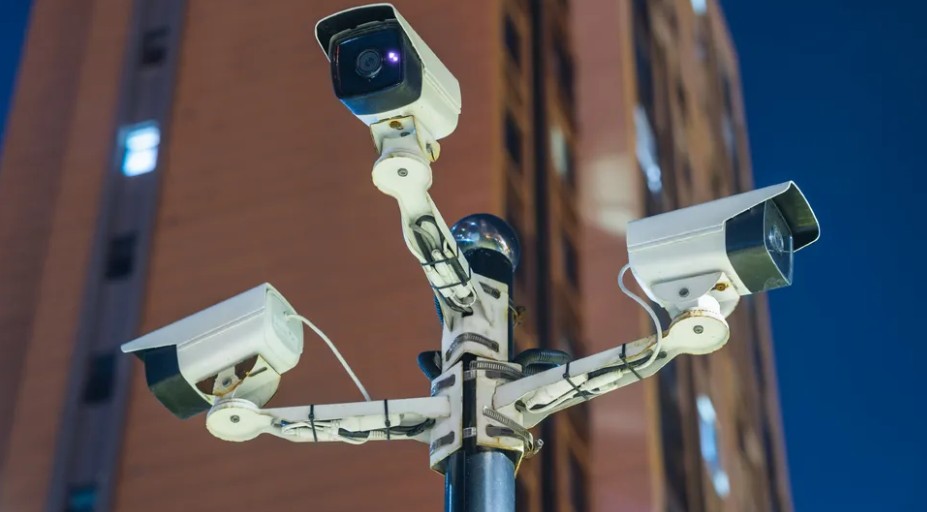
A dense web of cameras has spread across thousands of U.S. cities with little public attention. The article in Live Science argues that this infrastructure, once limited to passive recording, is now being transformed by artificial intelligence into a far more powerful system of real-time surveillance.
What distinguishes the current moment is not simply the number of cameras but their integration with AI tools capable of identifying faces, tracking movement, and analyzing behavior. These systems can link data across networks, enabling authorities to follow individuals over time and space. The article emphasizes that this shift effectively turns ordinary urban environments into continuous monitoring systems, where surveillance becomes ambient rather than exceptional.
A central concern is the absence of comprehensive national regulation. According to the author, there is no U.S. law that meaningfully limits how this data can be collected, shared, or used. As a result, both government agencies and private companies operate within a fragmented legal landscape, often without clear oversight or accountability.
The implications extend beyond privacy. AI-driven surveillance can influence policing practices, immigration enforcement, and public policy decisions. Critics argue that such systems risk amplifying existing biases, especially when algorithms are trained on incomplete or skewed data. Once deployed at scale, these technologies may normalize a form of constant observation that reshapes how people behave in public spaces.
Supporters of the technology point to potential benefits, including crime prevention and faster emergency response. Yet the article suggests that these advantages come with trade-offs that have not been fully debated. The quiet rollout of AI-enabled cameras has outpaced public understanding, leaving communities with limited opportunity to consent or push back.
Ultimately, the article frames the issue as a turning point. The infrastructure for mass surveillance is already in place; what remains unresolved is how society chooses to govern it. Without stronger safeguards, the expansion of AI-powered monitoring risks redefining the balance between security and individual freedom in ways that may prove difficult to reverse.
