

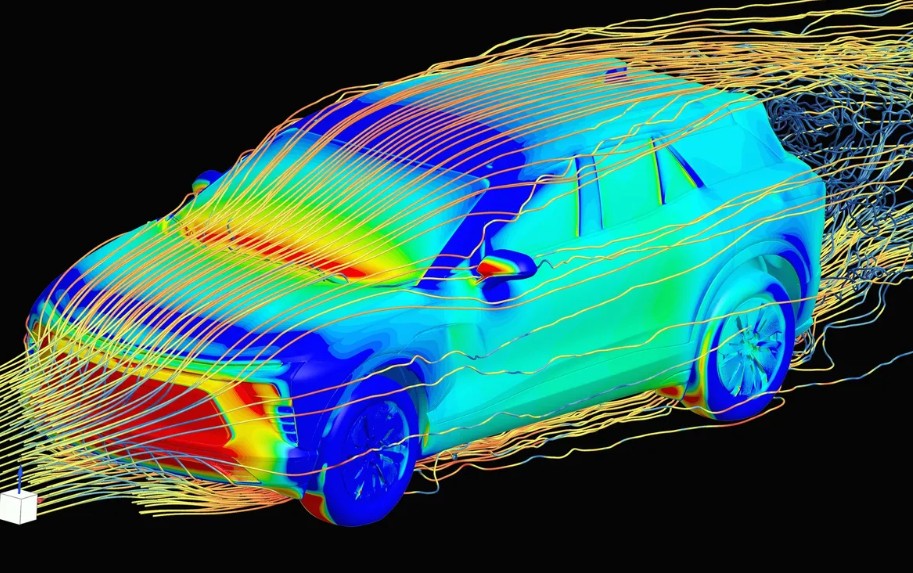
A new class of artificial intelligence, known as large physics models, is beginning to reshape engineering design by dramatically accelerating workflows traditionally dominated by simulation. The IEEE Spectrum article explains that these models are trained on physics-based simulation data and can predict outcomes such as airflow, heat transfer, or structural behavior in a fraction of the time required by conventional methods.
For decades, engineering design evolved from physical prototyping to numerical simulation, allowing companies to test ideas digitally before building them. Now, large physics models represent the next step in that progression. Instead of running full simulations, engineers can use AI models to generate near-instant predictions, enabling rapid iteration during early design stages. In one example, General Motors uses such a model to estimate a vehicle’s drag coefficient in minutes, replacing simulations that previously took weeks.
This speed advantage is significant. Depending on the application, AI-based inference can be thousands to nearly a million times faster than traditional simulation. The result is not just efficiency but expanded exploration: engineers can evaluate far more design variations before finalizing a concept.
Accuracy remains a nuanced issue. While these models may not replace high-fidelity simulations or physical testing in final validation stages, they are highly effective for early-stage design. Some researchers argue that incorporating experimental data into training could even allow AI models to surpass the accuracy of simulations in certain cases.
The technology is still evolving, with different architectures—such as transformers, geometric deep learning, and neural operators—being explored. Companies are currently building specialized models tailored to specific use cases, though efforts are underway to develop more general-purpose “foundation” physics models.
Despite differing views on whether simulations will eventually be replaced, there is broad agreement that engineers will remain central to the process. Rather than eliminating human expertise, large physics models are expected to automate repetitive tasks and free engineers to focus on higher-level design decisions, marking a shift toward more agile and exploratory engineering practices.
