

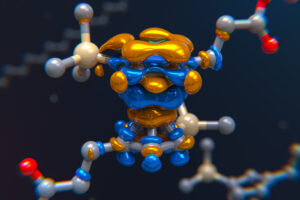
MIT and Duke University researchers have harnessed machine learning to engineer significantly tougher plastics by identifying novel mechanophore molecules—stress-responsive crosslinkers—that enhance polymer resilience, says MIT News.
The team focused on ferrocenes, iron-containing organometallic compounds not widely explored as mechanophores. They began with a database of ~5,000 synthesized ferrocenes, simulating around 400 of them to evaluate breaking-force thresholds. This data trained a neural network to predict which compounds could serve as weak yet effective crosslinkers for the remaining 4,500 ferrocenes, plus ~7,000 structurally similar candidates.
The AI-driven screening flagged two key molecular traits linked to enhanced tear resistance: interactive chemical groups attached to the ferrocene rings, and bulky substituents on both rings—features that elude conventional chemical intuition.
One standout candidate, termed m-TMS-Fc, was synthesized and incorporated into a polyacrylate-based polymer. Surprisingly, this weak linker made the material about four times tougher compared with polymers using standard ferrocene crosslinkers. The implication: stronger, longer-lasting plastics that could reduce waste by extending material lifespans.
Looking ahead, the researchers aim to use this ML-assisted workflow to discover mechanophores with additional functionalities—such as color-changing or catalytic behavior under mechanical stress—opening avenues for applications in stress sensors, smart catalysts, and biomedical systems.
