

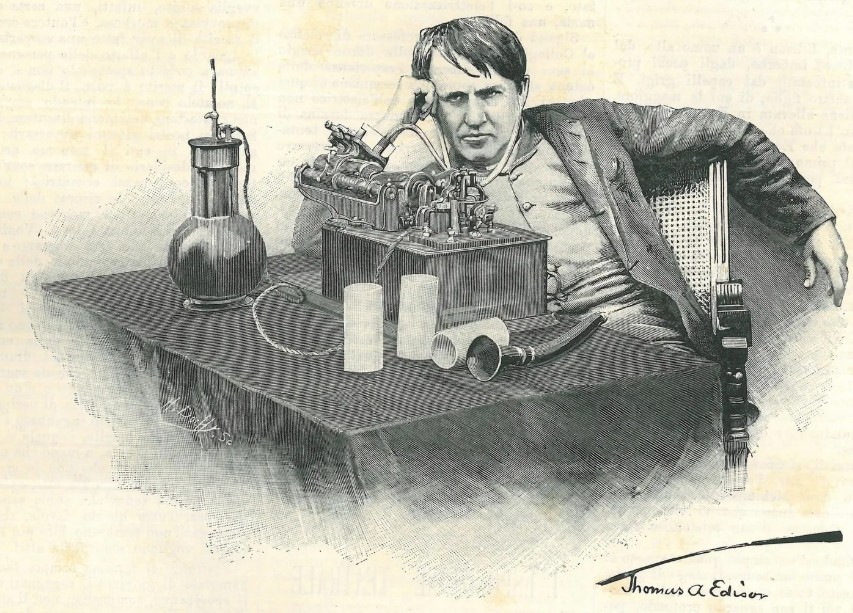
A Forbes article by Anna DeMeo argues that the rapid rise of artificial intelligence may revive one of the oldest engineering debates in modern history: Thomas Edison’s preference for direct current power systems over Nikola Tesla and George Westinghouse’s alternating current model. Nearly 150 years after the original “current wars,” the unprecedented electricity demands of AI data centers are exposing inefficiencies in today’s AC-dominated grid infrastructure.
The article explains that modern AI workloads consume extraordinary amounts of power because large language models require dense clusters of GPUs operating continuously. Traditional electrical grids distribute AC power efficiently over long distances, but data centers ultimately convert much of that electricity back into DC power to run servers, storage systems, and semiconductor hardware. Each conversion step introduces energy loss, heat generation, and additional cooling requirements.
DeMeo notes that advances in power electronics, battery storage, and high-voltage direct current transmission are making DC systems more practical than they were during Edison’s era. Some next-generation data center designs are beginning to explore direct current architectures internally to reduce conversion inefficiencies and improve energy performance. The article suggests that AI infrastructure could accelerate the adoption of localized DC microgrids, especially in facilities optimized for heavy computational workloads.
The article also connects the issue to broader concerns about grid reliability and energy sustainability. Utilities across the United States are struggling to meet the growing electricity needs of hyperscale AI facilities, many of which consume as much power as small cities. As a result, engineers and policymakers are reconsidering infrastructure assumptions that have remained largely unchanged for decades.
Rather than declaring Edison the historical victor outright, the article frames AI as a technological force reshaping the economics of electrical distribution. The same innovations that once made AC dominant may no longer align perfectly with the energy realities of modern computing. In this environment, direct current systems are reemerging not as relics of an abandoned vision, but as potential tools for managing the immense power appetite of artificial intelligence.
