

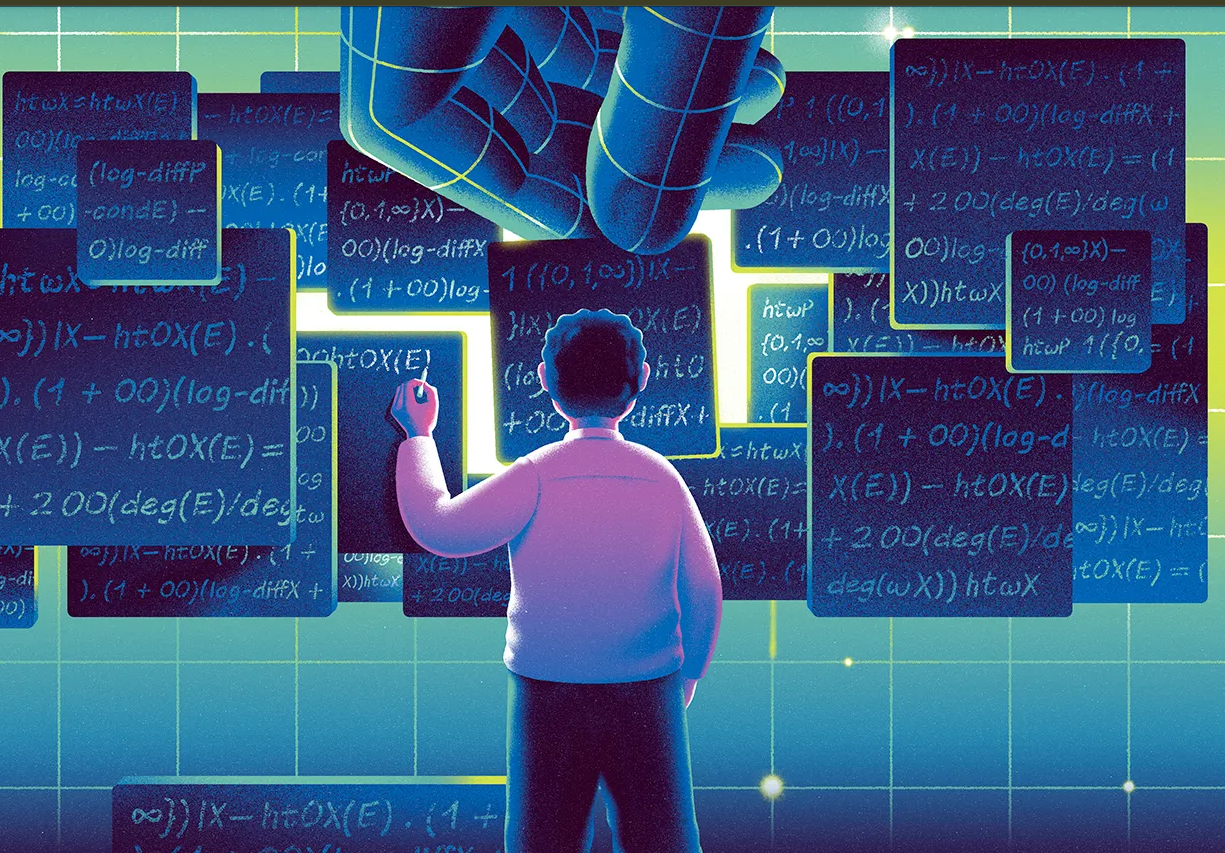
Artificial intelligence is increasingly tackling math problems once considered out of reach, changing the way experts think about what machines can do in pure mathematics. AI systems from major labs such as Meta, OpenAI, and DeepMind have recently taken on tasks far beyond simple algebra, demonstrating strengths in areas that require layered reasoning and creative insight, tells Live Science.
One high-profile example involved Meta’s AI finding Lyapunov functions, a key tool for understanding whether dynamic systems stay stable over time. While this marked progress, the system solved only about 10% of randomly generated problems and still needed significant human guidance, far from fully autonomous breakthroughs.
Performance at the International Mathematical Olympiad (IMO) has also drawn attention. Specialized AI models have solved multiple IMO problems within time limits, matching or nearing the silver-medal standards that human competitors achieve. Even so, these models rely on pre-processing, translation into machine-friendly formats, and extended computing time, unlike human solvers working under strict time constraints.
Experts are split on what this means. Some, including Fields Medalist Terence Tao, believe AI could soon streamline mathematics research by handling thousands of conjectures and linking fields in ways humans might not spot. Others caution that current AI still produces plausible-looking results that aren’t guaranteed correct, because models optimize for probability rather than mathematical certainty, meaning humans must verify outcomes rigorously.
Frontier benchmarks crafted by mathematicians show today’s AI solves only a small slice of deeply challenging problems, highlighting the gap between current capabilities and the full breadth of mathematical creativity.
What’s clear is that AI won’t replace mathematicians anytime soon, but it’s becoming an indispensable tool. Researchers see its greatest value in generating conjectures, testing ideas rapidly, and surfacing connections that might take humans years to notice. The long-term impact will depend on how mathematicians and AI develop alongside each other, reshaping research workflows rather than displacing human expertise.
