

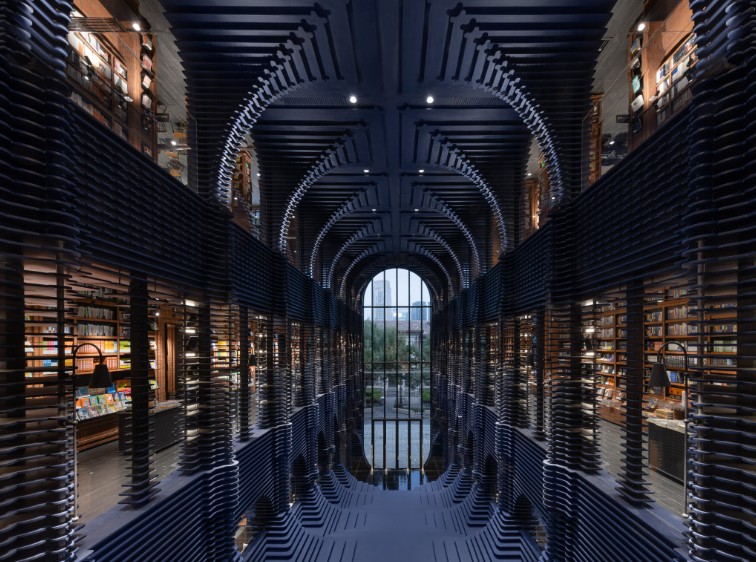
The growing presence of artificial intelligence in architecture has created a paradox within the profession. Rather than abandoning traditional methods, many architects appear to be embracing craft and physical making more strongly than before. As AI becomes more capable of generating images, simulations, and design variations, designers are increasingly reasserting the value of human judgment, material knowledge, and the visible process of construction, tells this Architizer article.
Architecture has long evolved alongside technological change. Drawing boards gave way to digital modeling, which later expanded into parametric design and computational optimization. Each step improved precision and efficiency, but it also created distance between architects and the tactile process of making. Craft gradually became associated with slower, more labor-intensive methods and was often treated as a nostalgic or expensive luxury.
The rise of AI might have been expected to accelerate this trend toward abstraction. Instead, many architects see AI as an opportunity to shift attention back to the physical act of building. If AI tools can handle tasks such as rapid visualization, environmental analysis, code compliance checks, and documentation, designers may have more time to focus on experimentation with materials, assembly techniques, and spatial experience.
The renewed interest in craft also reflects questions of authorship and identity within the profession. Algorithms can generate results quickly, but they often conceal the thinking process behind those outcomes. Craft, by contrast, reveals the steps through which a design emerges. Details, joints, and material choices make the architect’s reasoning visible and help communicate intent. In this sense, craft restores agency to designers in an era dominated by automated production.
Rather than rejecting technology, many architects are reframing their relationship with it. AI is viewed as a powerful tool that can extend creative exploration while leaving the responsibility for meaning, context, and construction decisions in human hands. The most compelling architecture may therefore arise from a synthesis of digital intelligence and tactile knowledge.
As AI continues to reshape design workflows, the profession may discover that technological progress does not eliminate craft. Instead, it highlights the enduring importance of human insight in transforming digital ideas into built form.
