

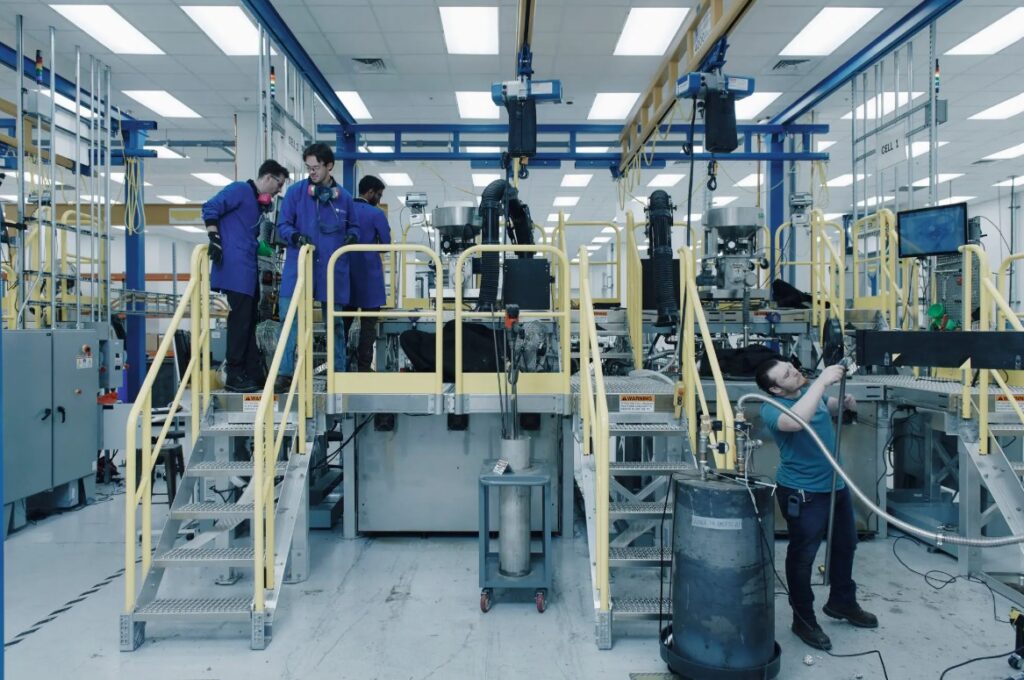
In a quiet New Hampshire office park, two furnaces are producing small batches of rare-earth metal ingots, illustrating what rare-earth processing currently looks like in the United States, tells The New York Times article. These metals, essential for electric vehicle motors, advanced electronics, and defense systems, sit at the center of a global supply chain that has long been dominated by China. Although rare-earth elements such as neodymium and dysprosium are not scarce in nature, they are difficult and expensive to refine into usable forms. This challenge allowed China to capture more than 90% of global processing capacity.
The United States once played a significant role in the industry, but by the mid-1990s, lower Chinese prices driven by industrial policy and looser environmental rules pushed many Western producers out of the market. Today, rebuilding domestic capacity has largely fallen to startups such as Phoenix Tailings, which operates the New Hampshire plant. The company converts rare-earth oxide powders into metal using a closed-loop process designed to minimize emissions, unlike older methods that release potent greenhouse gases.
Phoenix Tailings sources material from the United States, South America, and Australia, deliberately avoiding reliance on China. Its approach reflects a broader push by Western governments to reduce strategic dependence on Chinese supply chains, especially as rare earths play a growing role in clean energy and defense. Trade tensions and Chinese export restrictions have drawn new investors and customers, stabilizing the company after a near-bankruptcy in late 2024.
The economics remain challenging. Rare-earth metals generate modest profits, require complex processing, and face competition from Chinese producers that have at times sold below cost. Federal support has become critical, with U.S. government subsidies and direct investment helping domestic firms survive. Phoenix Tailings plans to expand further by eventually processing mining waste, or tailings, to recover rare earths across the full value chain.
Despite rising prices and growing interest, uncertainty remains. The industry’s future depends heavily on continued government support, technological advances, and whether domestic producers can compete with China’s entrenched dominance in a market that is opaque, volatile, and strategically important.
