

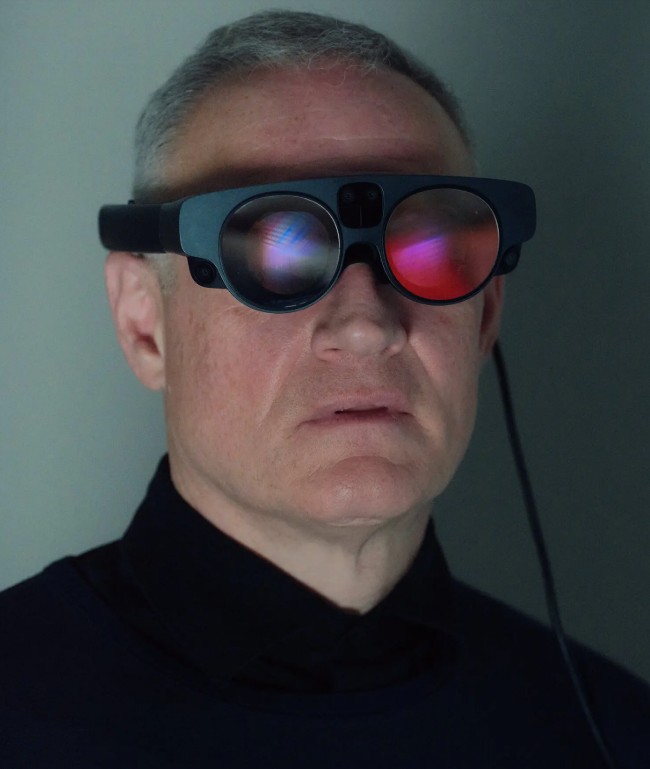
Audience members take their seats wearing lightweight glasses and see fellow patrons around them. The lights dim. Four actors appear to walk into the room, stand close, and speak directly to each person. Ian McKellen opens the experience with a calm invitation not to panic. The moment feels personal and immediate, yet the performers are digital presences created through mixed reality technology rather than physically present bodies, tells The New York Times.
An Ark, written by Simon Stephens and opening at the Shed in January, is among the earliest theatrical works designed specifically for mixed reality. The production blends the physical environment with volumetric recordings of actors so convincing that viewers feel addressed as individuals rather than as part of a crowd. McKellen, Golda Rosheuvel, Arinzé Kene, and Rosie Sheehy guide each audience member through a poetic journey that traces a whole life, evoking memory, vulnerability, love, grief, and wonder. The script is written largely in the second person, an approach Stephens found uniquely suited to the medium and capable of creating an intimacy rarely achieved at scale in theater.
Producer Todd Eckert and his company Tin Drum have spent years refining the technology behind the work. Their earlier projects, including collaborations with Marina Abramović and a posthumous concert with Ryuichi Sakamoto, advanced the art of volumetric capture. For An Ark, the team achieved unprecedented fidelity, allowing audiences to scrutinize facial expressions, eye contact, and subtle gestures at close range. New software ensures that the performers appear to meet each viewer’s gaze, strengthening the illusion of presence.
Director Sarah Frankcom initially approached the project with skepticism but came to see mixed reality as a tool that could expand, rather than replace, theatrical language. Rehearsals followed traditional methods, with cameras standing in for the audience. Performances were captured in continuous runs, preserving the discipline and energy of live theater.
The result is not a replacement for stagecraft but a new form of communal storytelling. An Ark suggests that technology, used thoughtfully, can deepen human connection rather than dilute it.
