

Following is a transcript of Ajei Gopal’s keynote at Ansys’ Simulation World, taking place virtually over July 16 and 17th.
Hello everyone, and welcome to Simulation World.
As you may have heard, we expect the ANSYS merger with Synopsys to close within the next few days. At that time, I will transition from President and CEO of ANSYS to a member of the Synopsys board of directors. Sassine Ghazi, who you’ll hear from later during Simulation World, will become President and CEO of the combined company.
As you will soon learn from both of us—as well as from countless ANSYS customers—the very nature of products and their life cycles is fundamentally transforming, thanks to the power of simulation and artificial intelligence. The old ways of working, where the physical product was the gold standard, are now behind us. We live in a new operating model: digital first and physical second. That shift will open a new world of possibilities for you and your customers. This is the next great challenge that we will face together as Synopsys.

When I was a child, television transported me into a fantastical world of flying cars, robot housekeepers, and 3D-printed food. I was a big fan of The Jetsons cartoons. For those unfamiliar with the show, it was set in the future. It featured amazing technologies—flat-screen televisions, video calls, smart watches—that, in 1962, were only silly ideas in the minds of animators. Today, of course, they are commonplace, and more and more Jetsons innovations are coming to life.

Technologies including artificial intelligence, next-generation computing, and robotics are evolving at breakneck speed. Simulation, of course, is a key technology that will play a critical and growing role in bringing our science fiction future to life.
Take flying cars, for example. Several companies—including ANSYS customer Pivotal—are developing fully electric personal aircraft. While I’m not a pilot, I had the chance to try Pivotal’s flight simulator. I safely flew and landed the aircraft with almost no instruction, which is amazing. That experience is possible thanks to advances in avionics and electric motor technology, all facilitated through simulation. Pivotal has made great progress, and you can order these flying cars right now for delivery next year.
Jetsons fans will also remember Rosie, the family’s robot housekeeper. Many of us already have robots in our homes that vacuum the floors, though they may not look human like Rosie. Technologies, including simulation, enable the creation of robots across virtually any form factor. Moreover, these robots are not merely programmed to be intelligent—they learn from their environment and adapt.
All of this is no longer just science fiction. The world of The Jetsons is rapidly converging with our own, thanks to simulation. Whether you’re designing flying cars, developing consumer electronics, or creating life-saving medical devices, this is an exciting time to be in business.
In fact, I would argue that this is the most important, most consequential era for all industries since ANSYS was founded 55 years ago. Back then, the physical prototype represented the gold standard in product development, and simulation was used to approximate its behavior. That “physical first, digital second” mindset has dominated many industries for decades.
But that mindset is now shifting. Today, digital artifacts —the digital twins of modern products —are becoming the gold standard. The final product and any prototypes are created to embody the behavior of the digital design. The implications are profound. Instead of relying on traditional iterative processes, developers will increasingly design, test, and optimize products entirely in the digital domain—creating faster, more accurate, and lower-cost outcomes.
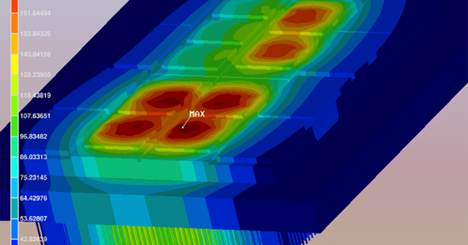
One industry that has already adopted this approach is the semiconductor industry. With process technologies now down to two nanometers, chips can only be designed with digital tools. Semiconductor companies start by designing their chips entirely digitally. They test and tweak designs virtually, and sign-off happens in the digital domain. Only at tape-out—when the design reaches the foundry—does a physical product come into being.
As an industry, with advances in digital technologies, we now have the opportunity to take this highly agile, digital-first process and make it pervasive across other sectors. Simulation and AI will be the most important tools enabling this paradigm shift and delivering unprecedented value.
And the timing couldn’t be better. Every sector is undergoing digital transformation. Products are becoming smarter and more feature-rich with AI enhancements. Virtually every product is becoming increasingly complex, while consumers are demanding faster delivery than ever. This is driving cycle times to historic lows.
At the same time, competition is intensifying. Smaller, more agile companies are challenging long-standing incumbents. And to make matters more complex, there is a shortage of talent to address all these challenges.
Any one of these dynamics would represent a sea change on its own. Taken together, they are ushering in an entirely new way of doing business. You have no choice but to face these challenges head-on and create opportunities within them. Organizations that move quickly and embrace these changes will gain an advantage. Those who cling to old ways will be left behind.
Let me briefly walk through these fundamental changes, how they impact your organizations, and how ANSYS Simulation is helping you take advantage of this disruption.
First, emerging technologies are spurring greater product functionality while transforming how products operate. Through the power of ANSYS Simulation, organizations are bridging the gap between the physical and digital worlds by creating ever smarter systems—cars, mobile devices, even kitchen appliances—that learn from their own behavior.
With digital twins and simulation, products are essentially upgrading themselves while in use. Consumers no longer have to wait for a new device to experience new capabilities. Simulation’s role in these next-generation products is more critical than ever.
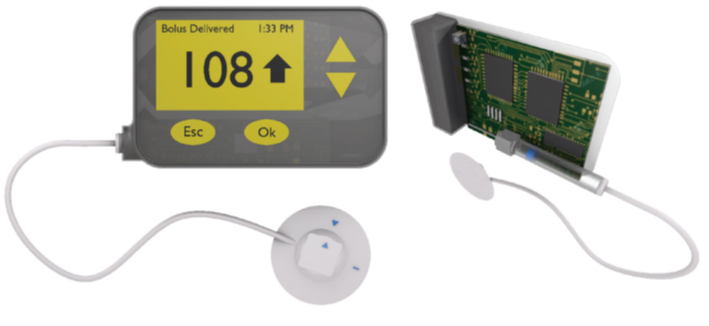
Take a diabetic’s insulin pump. Once a simple mechanical device, it has been transformed through simulation. Our customer AMD has been a leader in 3D IC technology, driving innovation across its own products and those of its customers. During Simulation World, you’ll hear how AMD is using the latest EDA solutions to tackle challenges in floor planning, construction, and sign-off for future heterogeneous multi-die devices.
The digital transformation of products and processes has only heightened customer expectations. Consumers want more—and they want it faster. Simulation and AI are accelerating the development of these products, fueling demand for even more simulation.
For example, the increase in electronics and semiconductors in automobiles—from entertainment systems to driver assistance to safety features—has consumers expecting more, which is driving cycle times lower. In 2010, the best-selling vehicle in North America, the Ford F-150, had a cycle time of four to five years. Today, Ford is targeting a single-year cycle, even as the vehicle has become vastly more complex.
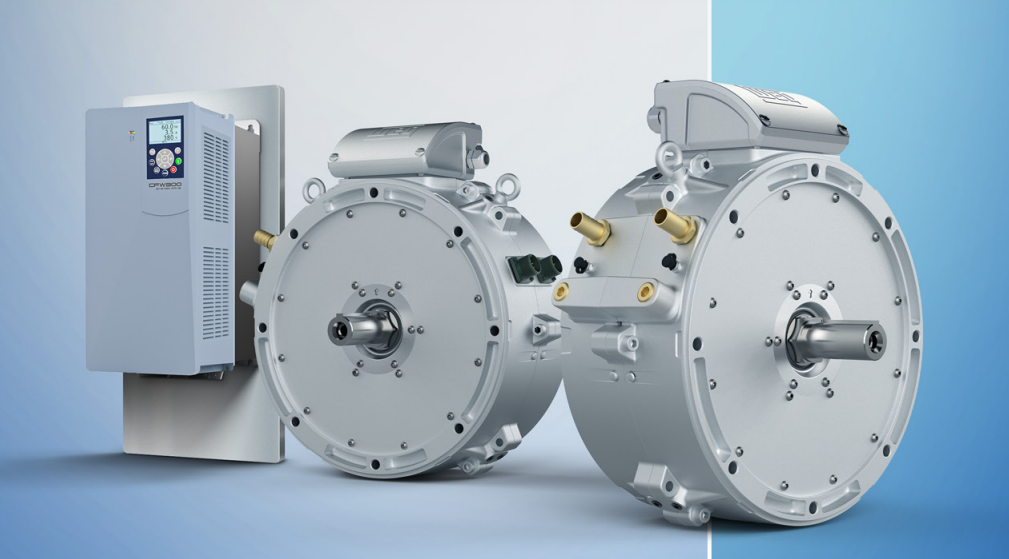
Nearly every sector faces the same challenge: delivering innovative, high-quality products to market faster than ever. Later during Simulation World, you’ll hear from WEG, a major electric motor producer. By using ANSYS Simulation, WEG has improved the robustness, quality, and sustainability of its products while boosting competitiveness and reducing cycle times. The company increased the number of simulations it runs from a few per month to more than one every half-second—over 800,000 simulations performed in 2024 alone. The results include optimized packaging and the world’s first industrial axial flux motor platform.
If customers aren’t satisfied, they will choose competitors, and that shift has upended entire industries. Innovative startups that are already embracing next-generation technologies are disrupting the status quo, often through the use of simulation.

During Simulation World, you’ll hear from Circleg, which is tackling two major problems: the 57 million tons of harmful plastic pollution generated each year and the fact that over 65 million people worldwide live with lower limb amputations, only 10% of whom have access to prosthetics. Circleg recycles plastic into affordable prosthetics. With ANSYS Mechanical and Granta powering their designs, they quickly developed low-cost, fully customizable, comfortable artificial limbs. It’s an inspiring story, and I encourage you to watch their presentation.
Addressing all these demands is putting a strain on the workforce. Even with AI, there simply isn’t enough talent to meet the needs of organizations navigating this change. And as products become more sophisticated, the likelihood of failures increases. Developers may not fully understand all operating parameters or use cases before products are built.
ANSYS’s intuitive solutions enable even non-experts to benefit from rich simulation insights. Integrated workflows allow for faster, more meaningful results. ANSYS has been an early adopter of AI in simulation, embedding AI across our portfolio to improve ease of use and accelerate time to solution. For example, our virtual support assistant, ANSYS GPT, leverages AI to provide helpful answers to your most pressing engineering questions within seconds.
For 55 years, ANSYS has had the honor of working with companies like yours. Together, we’ve turned ideas into reality—taking concepts, testing them virtually, and bringing them to life. You inspire all of us to keep pushing the boundaries of simulation further.
You—our customers—include some of the world’s largest brands, mid-market innovators, and pioneering startups. You are breaking down barriers that have stood for decades by harnessing simulation as your secret weapon.
As I’ve described, we are living in an important moment—a time that is laying the groundwork for what’s to come. Like The Jetsons, we are truly living in the future. And it’s a future we are creating together. With ANSYS on your side, your organization can seize these disruptions and further cement your leadership.
Thank you, and have a great Simulation World.
